Moving to Austin
Moving to Austin? What it costs, what your money buys by area, property taxes, traffic, the heat, the music, the food, and how to buy a house from out of state.
Austin has roughly 980,000 residents in the city and about 2.5 million across the metro, and it added people faster than almost any large American city for two decades before the pace cooled. If you are reading this, you are probably one of the next ones.
Here is the short version, before the detail.
Texas has no state income tax, which is the headline most people arrive with. Property taxes are high, generally landing around 1.8% to 2.1% of assessed value in Travis County, which is how the state funds what an income tax funds elsewhere. Whether Austin is cheaper than where you live now depends almost entirely on which of those two numbers was bigger for you.
Housing is the main cost. Central neighbourhoods run above $1 million; suburbs twenty-five minutes out run less than half that. Traffic is genuinely bad and I-35 is the reason. The summer is long and hot. The music, the water and the food are as good as advertised.
This guide covers the money, the logistics and the living, and it is written by a mortgage broker who lives here — so the house-buying parts are the parts we know best.
What it actually costs to live here
No income tax, and what replaces it
Texas levies no personal state income tax. For someone moving from California, New York or New Jersey, that is an immediate and substantial raise.
What funds schools, counties and cities instead is property tax. In Travis County a typical City of Austin address stacks the City of Austin, Travis County, Austin ISD, Austin Community College and Central Health, and lands in the range above. On a $600,000 assessed value that is real money every month, and your lender collects it in escrow alongside the mortgage payment.
Sales tax in Austin runs 8.25%, among the higher rates in the country.
The practical test: take your current state income tax bill, compare it to what the property tax would be on the house you would buy here, and see which way the arithmetic falls. For high earners buying modestly, Austin wins easily. For modest earners buying expensively, it can be closer than expected.
Utilities and insurance
Austin Energy is municipally owned, which means addresses inside the city are not part of the Texas deregulated retail electricity market and you do not shop providers the way you would in Dallas or Houston. Outside the city, you may be served by a cooperative such as Pedernales Electric, or by a retail provider you choose.
Summer electricity bills are the shock. A full-size house running air conditioning through July and August costs what heating a northern house costs in January, and then some.
Homeowner's insurance is moderate by Texas standards here — no coastal windstorm requirement, no hurricane deductible. Hail is the main claim driver, and roof age is the main premium driver.
Water comes from the Highland Lakes, and drought restrictions on outdoor watering are a normal part of summer.
What your money buys, by area
This is the question everyone asks, and the honest answer is that Austin is several markets wearing one name.
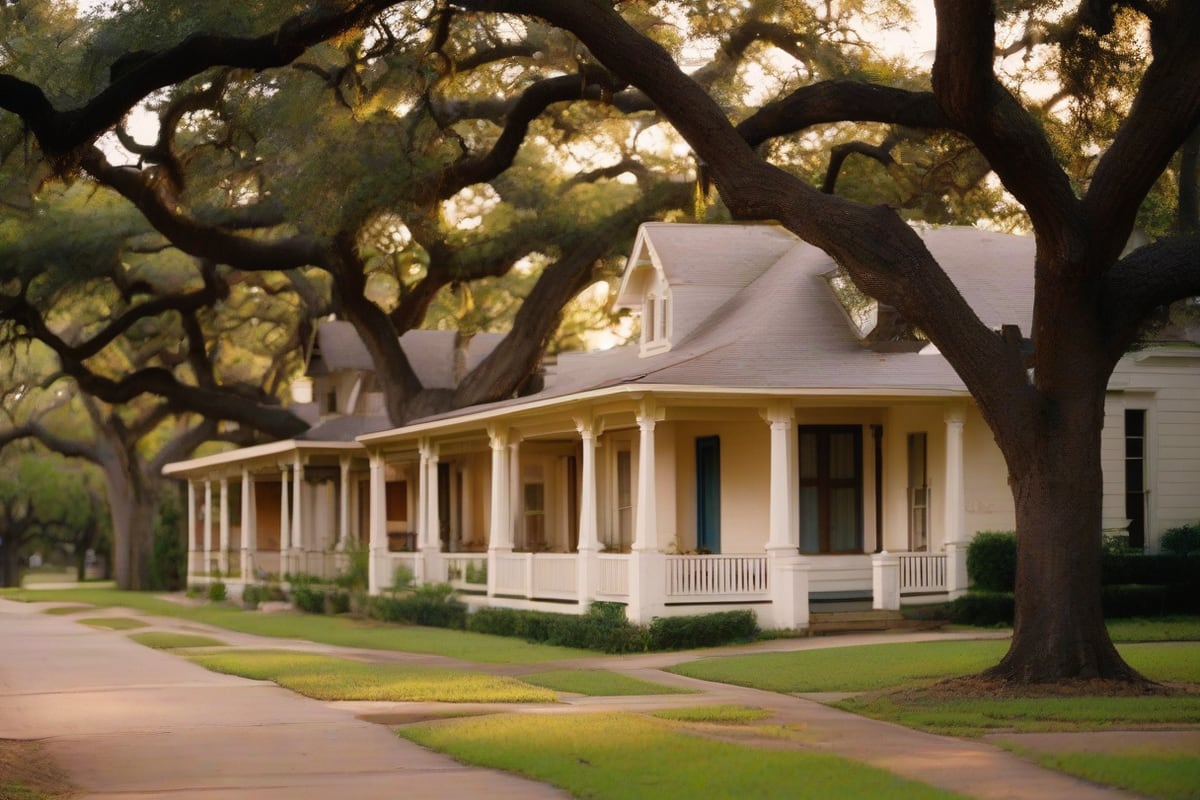
Central, west of I-35 and inside the loop — Tarrytown, Zilker, Barton Hills, Travis Heights — generally trades above $1 million. The housing is older, often 1930s to 1960s, frequently renovated or rebuilt, on lots whose land value carries most of the price.
Established central-north — Hyde Park, Allandale, Northwest Hills — generally runs $600,000 to $1 million, with Victorian and Craftsman housing in Hyde Park, post-war single-storey homes in Allandale, and 1970s split-levels on the hillsides of Northwest Hills.
East of I-35 — East Austin, Mueller — mixes century-old cottages with new infill and, at Mueller, a planned redevelopment of the old airport.
Southwest — Circle C Ranch and the neighbourhoods along MoPac south — carries 1990s and 2000s master-planned housing at $600,000 to $1 million.
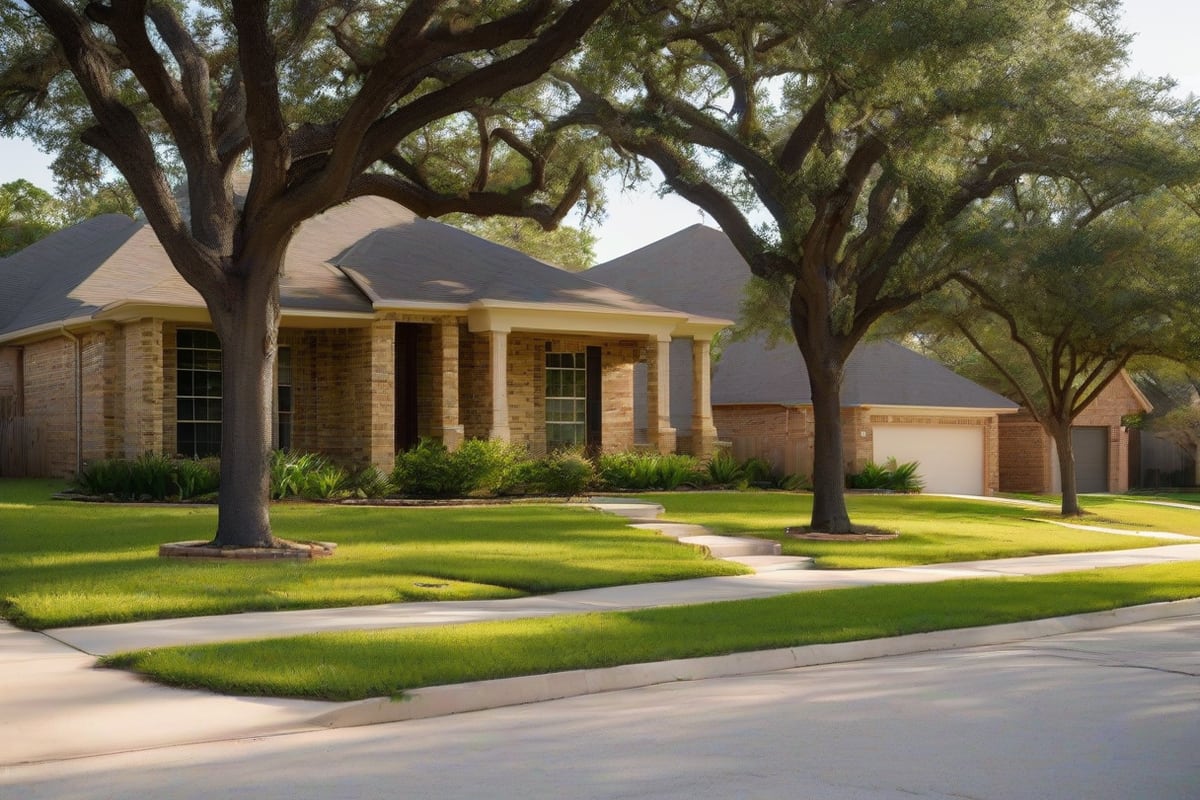
The suburbs are where most arriving buyers actually land. Round Rock, Cedar Park, Leander, Georgetown, Pflugerville and Hutto to the north; Kyle, Buda and San Marcos to the south; Manor and Del Valle east. Newer construction, more square footage, and prices frequently in the $350,000 to $500,000 band.

The Hill Country west — West Lake Hills, Lakeway, Steiner Ranch, Dripping Springs — trades high, on terrain that is genuinely beautiful and genuinely far from downtown at rush hour.
Our Austin guide and our best suburbs article go deeper on the comparison.
One thing the listings will not tell you
Two identical houses can carry very different monthly payments depending on which taxing units bill the parcel. A house in an unincorporated subdivision inside a municipal utility district can cost hundreds more per month than one inside the city at the same price. Our Travis County page explains the stack, and we check it on every file before issuing a pre-approval.
The tax figure on the listing is the seller's, not yours. Their exemptions ended at closing, and the sale reset the value to what you paid.
The single most common out-of-state surprise
Should you rent first or buy straight away?
Both answers are defensible, and the right one depends on how certain you are about where you want to be.
Renting first makes sense if you do not know the city, if your job location might change, or if you are arriving without the down payment you want. Austin is big enough that the wrong neighbourhood choice costs you an hour a day for years.
Buying straight away makes sense if you know the area, your work location is fixed, and you are comfortable with the payment. Every month renting is a month not building equity, and in a market that has appreciated the way this one has over the long run, that has historically mattered.
What tips it, more often than anything, is whether you still own a house somewhere else. That creates a sequencing problem, and it has known solutions — covered further down.
Our rent versus buy analysis runs the comparison with Austin numbers.
Property taxes, explained properly
This is the part out-of-state buyers get wrong most often, and it is worth a few paragraphs.
The appraisal district sets your value, not your lender and not the seller. In Travis County that is the Travis Central Appraisal District.
The tax figure on the listing is the seller's, not yours. Their exemptions ended at closing, and the sale resets the appraised value to what you paid. Budget on the new number.
File your homestead exemption as soon as you own and occupy the home. It reduces taxable value and — the part that compounds — caps annual increases in assessed value at 10% for as long as you hold and occupy it. The general filing deadline is April 30.
Protest in your first year. Your closing statement is evidence of market value, and it is the strongest evidence you will ever hand the district. The deadline is typically mid-May.
Escrow shortages surprise new owners in year two, especially on new construction, where the first bill may reflect only the lot. If the finished house lands on the roll a year later, the escrow catches up all at once.
Getting around
I-35 is the problem. It runs straight through the middle of the city, it carries both local and interstate freight traffic, and it is under long-term reconstruction. Any commute that crosses it at peak hours is unpredictable.
MoPac (Loop 1) runs parallel to the west and has a tolled express lane whose price floats with congestion.
US 183 and SH 71 carry the north-west and south-east diagonals; SH 45 and SH 130 are tolled loops that let you skirt the city entirely, with SH 130 posted at 85 mph — the highest speed limit in the country.
Austin-Bergstrom International sits about fifteen minutes southeast of downtown, which is unusually close for a city this size.
Transit is CapMetro buses plus the MetroRail Red Line from Leander to downtown. It serves a narrow corridor well and most of the city not at all; plan on driving.
The practical advice: before you fall in love with a house, drive from it to your workplace at 8am on a weekday. Not at noon, and not on a Sunday.
Jobs and the employers
Austin's economy rests on four pillars: technology, government, the university and healthcare.
Technology covers the large campuses along the northern corridor and the semiconductor manufacturing in and around the metro, plus an enormous number of smaller firms and remote workers.
Government is state government — Austin is the capital, and the Capitol complex, state agencies and the courts employ a great many people with stable, pensioned careers.
The University of Texas at Austin is one of the largest universities in the country and a major employer in its own right.
Healthcare has grown substantially, anchored by the Dell Medical School and the hospital systems across the metro.
The city also carries a deep layer of music, film, hospitality and food employment that gives Austin its character and does not pay like the technology sector. Both things are true at once, and the tension between them is most of what local politics argues about.
The weather, honestly
Summer is long. Triple-digit afternoons run in stretches through July and August, and recent years have brought more of them. Air conditioning is not optional, and outdoor plans move to early morning or after dark.
Winter is mild and occasionally violent. Most of it is pleasant — 60s and sunny in January is normal. But Central Texas gets ice events, and the February 2021 storm, which took out power and water across the state for days, is still a live memory. Buy a house with that in mind: ask about pipe insulation and whether the house has a gas range.
Spring and autumn are the payoff. Genuinely excellent, and the reason the festival calendar sits in March and October.
Cedar fever is real. From December through February, mountain cedar — properly, Ashe juniper — releases pollen in quantities that produce symptoms in people who have never had allergies in their lives. Newcomers often get it in year two rather than year one.
It floods. Central Texas sits in what is sometimes called Flash Flood Alley, where dry creek beds become dangerous quickly. Never drive into moving water, and check the flood zone on any property near a creek.

Things to do, which is why people come
Live music, nightly
Red River for the long-running rock clubs, Rainey Street for converted bungalows with patios, East Sixth for the newer bars, South Congress for the Continental Club.
Swimming in winter
Barton Springs holds about 68°F every day of the year. Three acres of spring-fed pool in the middle of Zilker Park.
Barbecue as institution
Franklin built the queue into the legend; Terry Black’s and la Barbecue are excellent and shorter. Lockhart, thirty minutes south, is the Barbecue Capital of Texas by act of the legislature.
Festival season
South by Southwest takes the city in March. Austin City Limits fills Zilker across two October weekends. Formula 1 lands at Circuit of the Americas the same month.
The bat flight
About 1.5 million Mexican free-tailed bats leave the Congress Avenue Bridge at dusk from spring to autumn — the largest urban bat colony in North America.
Water, everywhere
Ten miles of trail around Lady Bird Lake, swimming holes along the Barton Creek Greenbelt, and Lake Travis and Lake Austin upstream for anything with a motor.
Water
Barton Springs Pool is a three-acre spring-fed pool in the middle of Zilker Park that holds about 68 to 70 degrees year round. It is cold in August and warm in January, and it is the single most Austin thing in Austin.
Lady Bird Lake is the dammed stretch of the Colorado River through downtown, ringed by a ten-mile hike-and-bike trail that is busy from dawn to dark. No motorboats — it is kayaks, canoes and paddleboards.
Barton Creek Greenbelt runs for miles through the city's southwest with swimming holes that fill when the creek is running and turn to limestone when it is not.
Lake Travis and Lake Austin sit upstream, where boats, docks and waterfront housing live.


Live music
Austin calls itself the Live Music Capital of the World, and on a per-venue basis the claim holds up.
The districts: Red River for rock and the long-running clubs, East Sixth for the newer bars, Rainey Street for converted bungalows turned into patios, South Congress for the Continental Club and its neighbours, and Sixth Street proper for the crowds.
The festivals: South by Southwest in March, which takes over the whole city for a fortnight of music, film and technology. Austin City Limits in October, two weekends in Zilker Park. Austin City Limits the television programme has been taping here since 1974 and is the longest-running music series in American television history.
Food
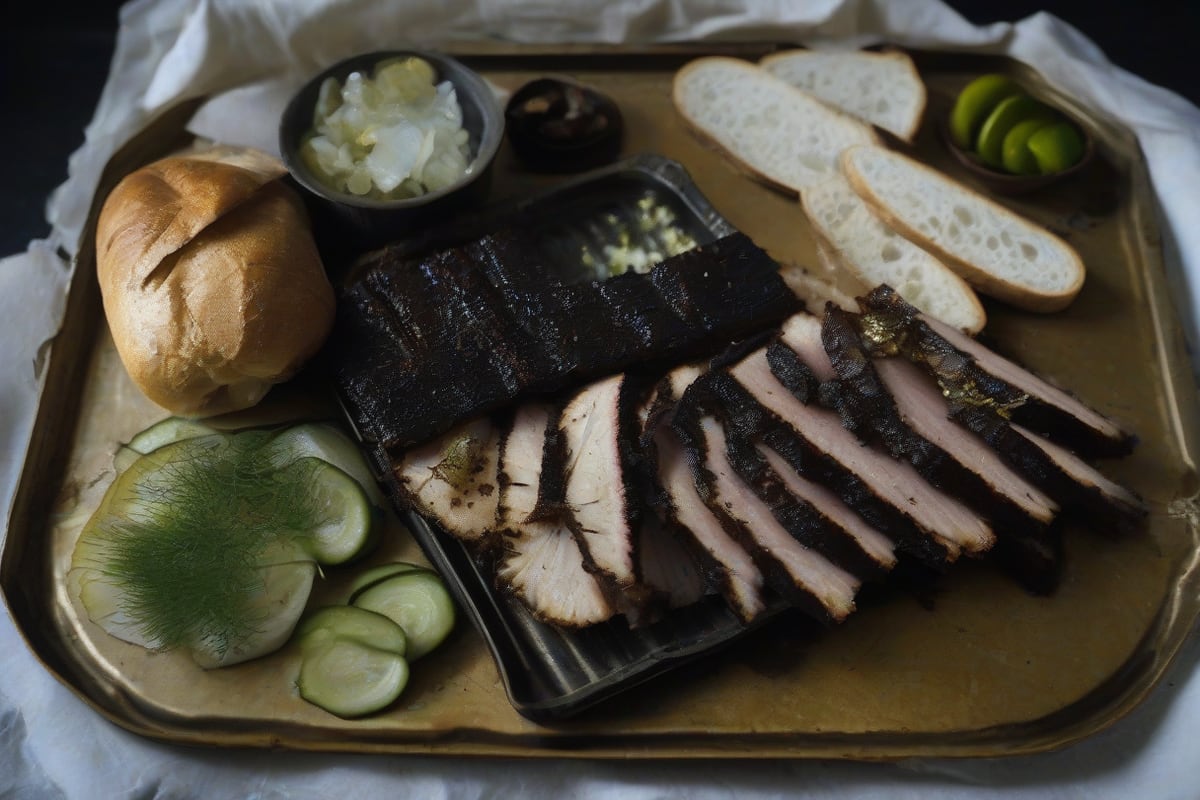
Barbecue is a serious local institution. Franklin Barbecue built its reputation on brisket and famous queues; Terry Black's, la Barbecue and a dozen others are excellent and less punishing. Thirty minutes south, Lockhart is the Barbecue Capital of Texas by act of the state legislature, and a day trip there is a rite of passage.
Tacos are the daily food, and breakfast tacos in particular are a local argument with no resolution.
The food truck culture is genuine rather than decorative — whole courtyards of them, often attached to a bar.
Sport
The University of Texas Longhorns play football at a stadium that holds north of 100,000 people, and autumn Saturdays reorganise the city around it.
Austin FC joined Major League Soccer in 2021 and sells out Q2 Stadium.
Formula 1 races at Circuit of the Americas southeast of the city each October, which is the single busiest weekend of the year for hotels.
Outdoors
Mount Bonnell gives the classic view over Lake Austin, up a short flight of stone steps.
McKinney Falls State Park sits inside the city limits in the southeast.
The Hill Country starts immediately west and runs for a hundred miles.
Fun facts you will hear within a month
The bats. About 1.5 million Mexican free-tailed bats roost under the Congress Avenue Bridge from spring through autumn — the largest urban bat colony in North America. They emerge at dusk, and people gather on the bridge and the lawn below to watch.
The moonlight towers. In the 1890s Austin installed 165-foot cast-iron towers to light the city. About seventeen still stand and still work, and Austin is the only city in the world that still has them. One of them, strung with lights every December, is the Zilker Holiday Tree.
The Capitol is taller than the national one. The Texas State Capitol stands about 302 feet, roughly fourteen feet higher than the United States Capitol in Washington, which is exactly as deliberate as it sounds.
"Keep Austin Weird" began around 2000 as an offhand remark by a listener calling a local radio station, became a bumper sticker, and then became the city's unofficial motto and a running argument about what the city is becoming.
Barton Springs has its own endangered salamander, found nowhere else on earth, which is part of why development over the recharge zone is regulated the way it is.
Day trips worth taking
Lockhart, thirty minutes southeast, for barbecue.
Dripping Springs and the Hill Country wineries, west on US 290, with distilleries and breweries alongside.
Fredericksburg, ninety minutes west, a nineteenth-century German settlement with peach orchards and the Pacific War Museum.
Gruene and New Braunfels, forty-five minutes south, for the dance hall and the rivers.
San Antonio, eighty miles south, for the River Walk and the Alamo.
Enchanted Rock, a vast pink granite dome north of Fredericksburg, worth the climb and the early start.
The moving checklist
Driver's licence: new residents have 90 days to get a Texas licence.
Vehicle registration: within 30 days, and Texas requires a state safety inspection and proof of Texas insurance first.
Voter registration is handled through the county.
Utilities: inside the city, electricity is Austin Energy and water is Austin Water — no shopping involved. Outside it, check which cooperative or retail provider serves the address.
Homestead exemption: file as soon as you own and occupy. This one is worth money every year you stay.
Property tax protest: calendar it for the spring after you buy.
Buying a house here while living somewhere else
This is the part we do, and the part where out-of-state buyers most often lose time.
Get pre-approved before you visit. Austin agents and sellers treat a fully underwritten pre-approval very differently from a rate-quote letter, and the difference shows up in whether your offer is taken seriously.
If you still own a home, the sequencing is the whole problem. Lenders count both payments unless the departing home is under firm contract, or it is documented as a rental with a signed lease and evidence of the deposit. There are four workable structures, set out on our Circle C Ranch page, and the right one depends on your equity and income.
Relocation packages change the structure. If your employer is paying costs or guaranteeing a buyout, say so at application rather than at closing.
Equity compensation needs history. Restricted stock and bonus income can be used, with documentation, and programs differ on how much they will count.
You can close remotely. Powers of attorney work when the lender approves the language in advance, and remote online notarisation is available in Texas for many transactions.
Lock with the timeline in mind. If you are buying new construction, the lock has to cover the build, not the optimistic completion date.
Start with our mortgage calculator for a payment estimate, and see how much home you can afford in Austin for the income side. If you are a first-time buyer, down payment assistance may reach you.
Frequently asked questions
Is Austin a good place to live?
It depends on what you want from a city. Austin offers no state income tax, a deep live music and food culture, year-round outdoor swimming and a large, diversified job market. Against that: high property taxes, a long hot summer, traffic concentrated on a single interstate, and housing costs that rose sharply over the past decade. People who want outdoor life, live music and career options in technology, government, healthcare or education tend to be glad they came. People who want a short commute and a low total cost of ownership often do better in a smaller Texas metro.
How much money do you need to live comfortably in Austin?
There is no single figure, and anyone who gives you one is guessing. The honest way to work it out is to price the housing payment first, because it dominates everything else. Take the price band of the area you would live in, add the property tax at roughly 1.8% to 2.1% of assessed value annually, add insurance and any district or association charge, and test that monthly figure against your income. We will run the real numbers on a specific address at no cost — that is more useful than a rule of thumb.
Is moving to Austin worth it?
For people relocating from higher-tax states with transferable incomes, the arithmetic frequently works out well, particularly once the absence of state income tax is counted. For people moving from lower-cost Texas metros, Austin is the expensive choice and the decision rests on what the city offers rather than on the money. The one group that consistently regrets it is the group that underestimated the property tax bill, which is the single most common out-of-state surprise.
What are the downsides of living in Austin?
Traffic, concentrated on I-35 and worsened by long-term construction. Summer heat that runs for months. Property taxes that offset much of the income tax benefit. Housing costs that rose faster than wages over the past decade. Cedar pollen from December to February. Limited public transit outside one rail corridor. None of these are secrets locally, and all of them are worth weighing before you commit.
Is Austin cheaper than California?
Usually yes on income tax, which Texas does not levy at all, and often yes on housing when compared with coastal California metros. Less so than people expect once property tax is included, because Texas rates are high and California's Proposition 13 limits increases on long-held property. Compare the total of income tax plus property tax plus housing payment, rather than the house price alone.
What should I know before moving to Austin?
Five things: property taxes are high and they are how the state funds itself; the tax figure on a listing is the seller's and not yours; two identical houses can carry very different payments depending on which districts bill the parcel; I-35 will shape your daily life more than you expect; and summer is long enough that you should visit in August before deciding, not in March.
What is the best area of Austin to move to?
There is no single best area, only trade-offs. Central neighbourhoods buy you a short commute and older housing at above $1 million. The northern suburbs buy newer and larger houses at roughly half that, with a longer drive. The Hill Country to the west buys terrain and views at a distance. East of I-35 buys proximity to downtown with a mix of old cottages and new infill. Pick the commute first and the house second, because the commute is the thing you cannot renovate.
How long does it take to buy a house in Austin?
About 30 to 45 days from accepted offer to closing on a typical resale, assuming the loan file is already underway. New construction follows the builder's completion schedule, which can run months. Out-of-state buyers should start the loan file before the house hunt, because that is the step that most often determines whether you can act quickly when you find the right place.
Do I need a car in Austin?
Almost certainly yes. Transit serves a narrow corridor and a handful of dense neighbourhoods well, and the rest of the metro barely at all. A small number of central neighbourhoods are genuinely walkable for daily needs; everywhere else assumes a car.
Talk to someone who lives here
We are an independent mortgage broker based on Balcones Drive in north central Austin, and we place loans across all 254 Texas counties. If you are planning a move, the most useful first step is a conversation about what the payment would actually be — taxes, insurance and districts included — on the kind of house you are considering.
Start your application · Run the numbers · Call 512-588-2771
Planning the move?
Tell us the area you are considering and we will model the real payment — taxes, insurance and district charges included — before you book the flight.