Dallas Mortgage Broker: Home Loans and Jumbo Financing
Dallas County adopted a tax rate of $0.248650 per $100 of taxable value for tax year 2026, up from $0.215500 the year before, and because that rate sits above the voter-approval rate the county's own notice of final vote sends it to a tax rate election on November 3, 2026. That is one line on a Dallas tax bill. Four or five more sit above and below it. Stack them and you get the figure that decides what you can buy in this city, ahead of almost anything else on the loan file.
Three things make Dallas financing different from the rest of Texas: the taxing units change every few blocks, the condominium towers north of downtown are reviewed as projects before you are reviewed as a borrower, and a large share of the purchase files here arrive attached to a corporate relocation package. This page covers all three. The county-wide mechanics, the appraisal district protest calendar and the older-housing inspection list live on our Dallas County lending guide.
Buying or refinancing in Dallas? We shop your file across a panel of wholesale lenders.
What does a Dallas home actually cost right now?
Redfin put the Dallas median sale price at $449,736 in September 2026, up 3.4% from a year earlier, with homes selling after about 53 days on the market against 55 days the previous September. Redfin also counted 2,421 Dallas homes sold that month, down from 2,588 a year before. Fewer sales, slightly faster, slightly higher prices.
Zoom out to the metro and the picture softens. The Texas Real Estate Research Center at Texas A&M, in its July 2026 Texas Housing Insight report, recorded 4.6 months of supply across Dallas-Fort Worth, with active listings 4.3% below the prior year and sales down 1.5% year over year. The center's home price index for the metro showed a year-over-year decline of 0.2% in July, which is about as close to flat as that series gets. Statewide in the same report, the Texas median sale price was $339,000 against 5.5 months of supply.
For the Dallas area specifically, the research center's first-quarter 2026 figures, reported in D Magazine in September 2026, showed sales volume down 2.3% and the median price down 3.2% year over year to $399,000, with 4.2 months of inventory. Economists generally treat roughly six months as the dividing line between a seller's market and a buyer's market, so four and a half months is a market with more choice than 2021 offered and less than a true buyer's market.
Read those numbers together and the practical conclusion is this. Inventory is adequate rather than plentiful, the clock on an option period is not racing, and the price you negotiate matters less to your monthly cost than which taxing units sit on the parcel. Sellers in several submarkets are paying closing costs again, which they were not in 2022.
Three cautions on market data in this metro. First, city-of-Dallas numbers and Dallas-Fort Worth numbers are different animals, and the gap between them is large enough to mislead you. Second, Redfin, Movoto, the research center and the local multiple listing service all define the median differently, so comparing a figure from one against a figure from another produces nonsense. Third, condominium medians and single-family medians move independently here, and the high-rise market has its own cycle.
Why do two Dallas addresses carry different tax bills?
A Dallas tax bill is a stack, not a rate. The usual components inside the city are the City of Dallas, Dallas County, the school district, Dallas College and the Parkland Hospital District, and some parcels carry a public improvement district on top. Change any one of those and the total changes.
Here is where the 2026 numbers sit. Dallas City Council set 69.78 cents per $100 of assessed value as the ceiling for the city rate on an 8 to 6 vote, landing on the city manager's proposed figure and rejecting both a 68-cent proposal and a 70.6325-cent proposal. That is one-tenth of a cent below the prior fiscal year and, as adopted, the eleventh consecutive annual reduction in the city rate. City CFO Jack Ireland noted at the time that Dallas property values have risen roughly 136% over the past decade against roughly a 12% reduction in the city's rate over the same period, which explains why eleven consecutive rate cuts have not produced eleven consecutive years of smaller bills.
Dallas County's own notice of final vote lists the adopted tax year 2026 rate at $0.248650, split into $0.238566 for maintenance and operations and $0.010084 for debt service, against a prior-year rate of $0.215500 and a no-new-revenue rate of $0.203785. The November 3, 2026 election decides it.
The school district is almost always the largest single line. County and appraisal district tables list the Dallas ISD 2026 rate in the neighborhood of $0.99 per $100, with sources differing in the third decimal place, which is a useful illustration of why you should not work from a table at all. Dallas College sits near $0.106575. Parkland's 2026 figure appears as $0.212000 in one published table and $0.242237 in another, and those two numbers cannot both be right.
The fix is simple and almost nobody does it. Pull a tax certificate on the parcel. It is a document from the tax assessor listing every taxing unit that levies against that specific property and the rate each one charges. It costs very little, it takes a day or two, and it replaces five estimates with one fact. The alternative, which is what most buyers do, is to read the tax line on the listing. That line shows the seller's bill, under the seller's exemptions, on a capped value the sale is about to reset. It is not your number and it was never going to be.
One more piece of the first-year arithmetic. Your lender sets up the escrow account against the appraisal district's current value and the current rates, then the sale resets the value and the seller's exemptions end at closing. If the reset is large, your escrow account runs short and your payment is recalculated at the first annual analysis. Ask your loan officer to escrow against the expected post-sale value rather than the seller's historical bill. It is a conversation that takes five minutes and prevents a surprise fourteen months later.
How does a Highland Park or Plano address change the stack?
Highland Park and University Park are separate incorporated municipalities completely surrounded by the City of Dallas. They levy their own municipal taxes, they are served by Highland Park ISD rather than Dallas ISD, and a mailing address that reads Dallas tells you nothing about which units apply.
The Dallas Morning News reported in March 2026 that the Town of Highland Park carries the lowest municipal property tax rate of any city in Dallas County, around $0.199 per $100 of valuation, with Highland Park ISD at roughly $0.835 per $100. The town's own property tax page has published both $0.199296 and $0.208550 in different places, so the town's current notice is the figure to trust. University Park adopted a base rate of $0.209534 per $100 and has a Proposition A on the November 3, 2026 ballot that would set the rate at $0.220055 instead.
Two consequences follow for financing. The combined rate in the Park Cities is lower than inside the City of Dallas, and the bills are nonetheless very large, because the rate applies to values several multiples above the citywide median. And every escrow estimate you were given based on a Dallas rate is wrong for a Park Cities parcel, in your favor on the rate and against you on the dollars.
Cross into Collin County and the whole stack changes again. A Plano address carries the City of Plano, Collin County, Plano ISD and Collin College, with no Dallas College and no Parkland. Richardson is the genuinely confusing one, because the city straddles the Dallas and Collin county line, and Richardson ISD serves parts of Dallas, Richardson and other cities. Two houses four streets apart in Richardson can sit in different counties, which means different appraisal districts, different protest deadlines and different county rates.
Far North Dallas is the city's northern tier, built mostly from the 1960s through the 1980s, inside the City of Dallas for municipal purposes but served in parts by Richardson ISD and in parts by Dallas ISD depending on the attendance boundary. Buyers who assume a Dallas address means Dallas ISD are frequently wrong up there, and the school district assignment is both a tax question and a resale question. Dallas ISD opened the fall 2026 semester with about 132,000 students, down from roughly 134,300 the year before according to KERA's August 2026 reporting, which makes it the second-largest district in Texas.
What makes a Dallas high-rise condo warrantable?
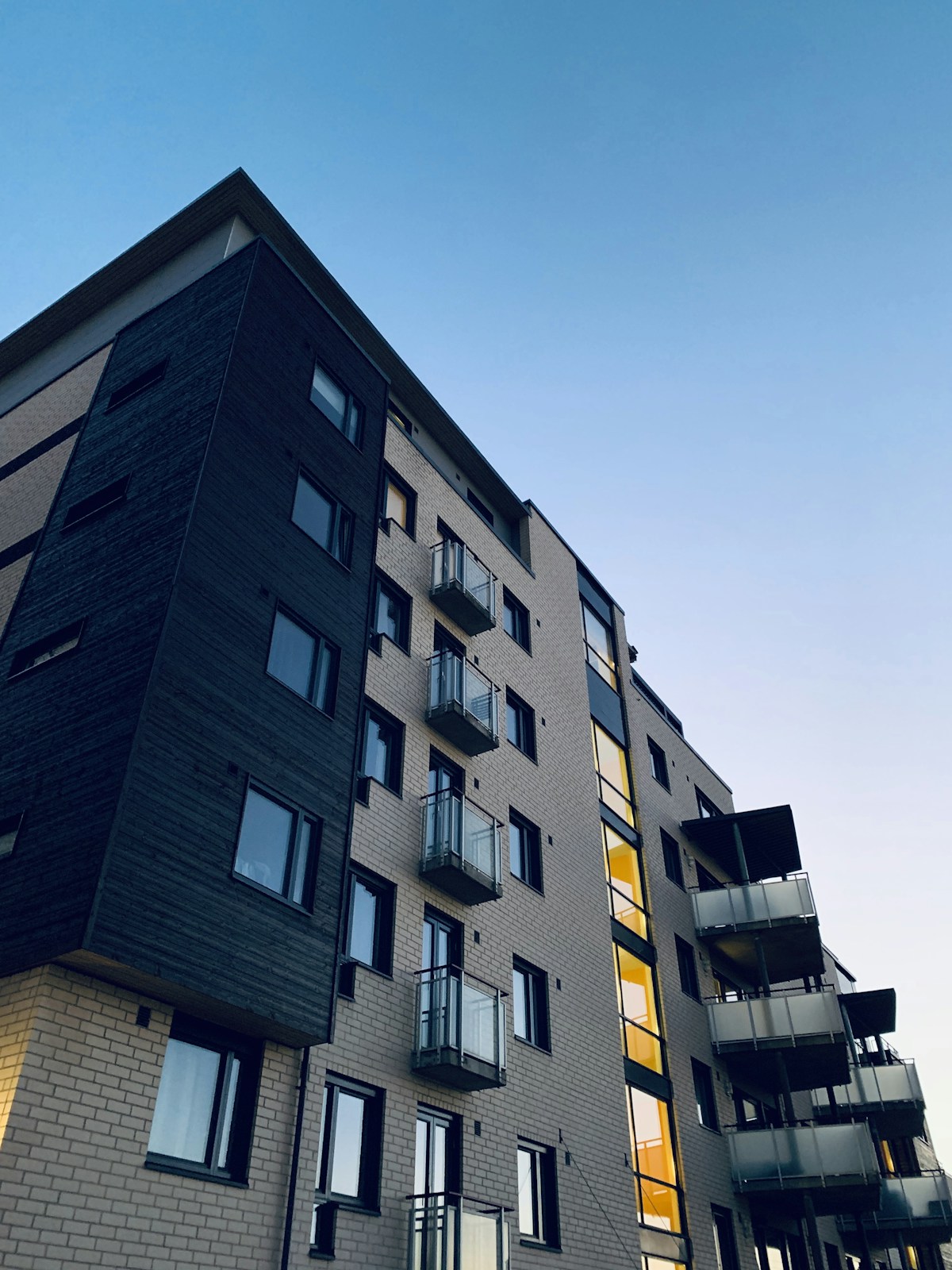
Uptown, Victory Park, Turtle Creek and the Arts District hold a concentration of mid-rise and high-rise condominium units that exists almost nowhere else in Texas at that density. Financing one is two approvals, not one. You are underwritten, and so is the project, and the project is where these deals fail.
The rules changed materially in 2026, and anyone quoting you the old playbook is behind. Fannie Mae retired the Limited Review path, the streamlined route that let a buyer with a larger contribution close without the lender examining the association's full finances. Industry summaries of Lender Letter LL-2026-03 date the change to loan applications dated on or after August 3, 2026. From that point a condominium loan runs through a Full Review or qualifies for a Waiver of Project Review, with the waiver covering two-to-four-unit projects and detached condominium units under Selling Guide section B4-2.1-02. For a 200-unit tower on McKinney Avenue, that means a Full Review, every time.
A Full Review is a real examination. Fannie Mae's Selling Guide, in the topics updated August 5, 2026 alongside Announcement SEL-2026-07, sets out what the lender is checking:
Reserve funding. Replacement reserves must be at least 10% of the annual budget, measured as the annual budgeted reserve allocation divided by annual budgeted assessment income. A reserve study completed within the past three years can be used instead of the percentage test. Industry summaries of the same lender letter put the minimum at 15% of annual budgeted assessment income for applications dated on or after January 4, 2027, and when a study is used instead, the budget must fund the study's highest recommended allocation rather than its baseline. If you are buying in a tower whose board has been holding dues flat for a decade, that date matters to you.
Delinquency. No more than 15% of total units may be 60 or more days past due on common expense assessments. The same 15% limit applies to special assessments. In a building with a lot of investor-owned units and a recent assessment, this is the test that trips.
Single-entity ownership. In a project of 21 or more units, no single person or entity may own more than 20% of the units. In projects of 5 to 20 units the limit is 2 units. There is an exception where the purchase itself reduces concentration, available when the entity owns no more than 49%, is actively marketing units to get to 20% or less, is current on assessments and has no special assessment pending. Buildings that went through a bulk sale during a soft stretch run into this.
Commercial and mixed-use space. Total space used for nonresidential or commercial purposes may not exceed 35% of the project or the building it sits in. Commercial parking can be excluded from the calculation. Separately, non-incidental business income to the association above 10% of budgeted income makes the project ineligible. Several Dallas towers sit above ground-floor restaurants, a hotel component or structured retail, and the 35% test is the first thing to check on those.
Litigation. A project is ineligible if the association is a party to pending litigation, or if the sponsor or developer is in litigation involving safety, structural soundness, habitability or functional use. Minor matters can still qualify, including cases where anticipated damages and legal expenses do not exceed 10% of the project's funded reserves. Construction defect litigation is the version that ends deals, and it is common enough in buildings delivered during fast construction cycles.
Critical repairs and deferred maintenance. Critical repairs include mold, water intrusion, advanced physical deterioration and significant deferred maintenance. Unfunded repairs above $10,000 per unit that should be undertaken within twelve months count against the project. If a special assessment was levied for a critical repair and the repair is not remediated, the project is ineligible until it is fixed and documented. Isolated damage affecting one or a few units may not qualify as critical.
Investor concentration. There is no longer a hard owner-occupancy percentage in the guide for this purpose, but 75% or more of units held as investment or second homes is a stated flag requiring additional due diligence, and it matters most when you are not buying the unit as your principal residence.
The practical sequence is short. On day one of the option period, ask the association or the management company for the lender questionnaire, the current budget, the most recent reserve study, the last two years of audited financials, the minutes for the past year and a written statement on litigation and pending special assessments. A cooperative management company turns that around in a week. An uncooperative one is itself a finding.
What happens when the building is non-warrantable?
The unit does not become unfinanceable. It becomes a different loan.
When a project fails the conventional tests, the file moves to a portfolio lender or a non-QM lender that keeps the loan on its own balance sheet instead of selling it to Fannie Mae or Freddie Mac. Those lenders write their own project rules, so a building with pending association litigation or a 40% commercial component can still close. The trade is pricing, a larger borrower contribution, tighter reserve requirements and a shorter list of lenders who will look at it. On a unit in a tower you want for the next decade, that trade is often worth making. On a unit you plan to sell in three years, it is worth thinking about hard, because your buyer will face the same project and the same limited lender list.
FHA runs a separate track entirely. A condominium project needs FHA approval, which is its own application with its own standards, and FHA also limits how many units in a single project can carry FHA-insured loans at one time. Single-unit approval exists for some units in unapproved projects, with its own conditions. Checking FHA's approved condominium list before writing an offer is free and takes about two minutes, and it saves a great deal of time later. Our page on FHA loans covers the borrower side.
Two more things that catch Dallas high-rise buyers. Appraisers are generally expected to support value with comparable sales inside the same project or in similar projects nearby, which is straightforward in Victory Park and harder in a one-of-a-kind building. And a condominium where the association or an operator runs a rental program with hotel-style services may be treated as a condotel, which is outside conventional eligibility regardless of how the project performs on every other test.

How do corporate relocation files actually work here?
CBRE's 2026 report ranked Dallas-Fort Worth first in the nation for corporate headquarters relocations, counting 11 net interstate or international headquarters moves in 2025 against 8 for second-place Miami, plus another seven intrastate or intra-metro headquarters moves. CBRE's dataset puts the metro above 100 headquarters relocations since 2018, more than any other metropolitan area it tracks. A meaningful share of Dallas purchase applications therefore arrive with an employer attached to them, and relocation files have their own failure modes.
The relocation package is a disclosure item, not a bonus. If your employer or its relocation management company is paying some or all of your closing costs, that money is an interested party contribution and it has to be disclosed at application, not discovered at underwriting. Your lender needs the relocation policy letter or benefit summary in writing, showing what is being paid, to whom, and whether it is paid directly to the settlement agent or reimbursed to you afterward. Direct payment to the settlement agent and after-the-fact reimbursement are treated differently, and conventional financing caps interested party contributions by occupancy and transaction type. A package that looks generous can exceed the cap, in which case part of it cannot be applied to closing costs at all. Finding that out on the closing disclosure is a bad afternoon.
Gross-up changes your income documentation. Many relocation benefits are taxable, and employers often gross up the payment to cover the tax. That gross-up usually appears on a pay stub or a year-end statement and it is generally not qualifying income, because it does not recur. Underwriters who see an unexplained bump in year-to-date earnings will ask about it, and the answer needs to come from the relocation letter.
Two mortgages at once is a solvable problem with specific documents. If your departing home has not sold, the payment on it counts in your debt-to-income ratio unless you can document otherwise. Converting it to a rental generally requires an executed lease and evidence of the security deposit, and only a portion of the gross rent is credited. Guideline treatment also varies with whether you have documented landlord experience and whether there is enough equity. If the home is listed rather than leased, expect the full payment to count and expect a reserve requirement measured in months of payments on both properties. Bring the listing agreement, the mortgage statement, the tax and insurance figures and the HOA statement for the departing home to the first conversation rather than the last.
Buying before the sale closes has three structures. A bridge loan against the departing home's equity, a line of credit drawn before you leave, or a purchase qualified with both payments counted and reserves to match. Employer buyout and guaranteed offer programs change the math again, because a guaranteed offer from a relocation company can sometimes be treated as a pending sale with documentation. Which structure fits depends on equity, timing and reserves, and the decision needs to be made before you write the offer, not after your contract is accepted.
Restricted stock and bonus income need paper, not explanation. Restricted stock units generally qualify only where the shares have vested and been distributed without restriction, supported by a vesting schedule showing both past and future vesting, brokerage statements, two years of W-2s and a current pay stub with year-to-date detail. Time-based awards are typically expected to show about twelve months of history with the current employer, performance-based awards closer to twenty-four, and a sign-on award of restricted stock that vests over time is generally not usable as qualifying income at all. Bonus income usually needs a two-year history plus the employer's written confirmation that it is likely to continue. Guidelines on continuance and on how the share price is valued differ between investors and change, so have your loan officer confirm the current requirement against the specific lender rather than a blog post.
An offer letter can start the file. Employment that has not begun yet can be documented with an offer letter under specific conditions, which matters when you are relocating ahead of a start date. The conditions are narrow and the documentation has to be exact, so treat it as a question to ask early rather than an assumption.
If your income is self-employment or distributions rather than salary, bank statement loans qualify on deposits instead of tax returns, which fits owners whose returns understate their cash flow.
Which Dallas areas are we talking about?
Describing a Dallas area usefully means build era, lot and structure type, school district and what the parcel's taxing units are. Those are the facts that change the loan.
Uptown and Oak Lawn hold the city's densest attached housing, from 1920s and 1930s low-rise courtyard buildings through 1990s mid-rises to towers delivered in the last fifteen years, on small lots north of Woodall Rodgers Freeway. Dallas ISD serves the area. Financing here is overwhelmingly a condominium project question, and the Katy Trail runs along the old Missouri-Kansas-Texas rail alignment through the middle of it.
Victory Park is a planned district around the American Airlines Center, built almost entirely after 2001, nearly all attached and much of it in towers with ground-floor retail and a hotel component in places. That mix is exactly why the 35% nonresidential test and the association's business income matter in this submarket.
The Arts District and Turtle Creek add older mid-rise and high-rise stock, including buildings from the 1950s through the 1980s. Older towers tend to have deeper reserve histories and also longer capital repair lists, and both show up in a Full Review.
The Design District, west of Stemmons Freeway along the Trinity River, was built as warehouse and showroom space and has been converted and infilled with residential buildings over the past fifteen years. Conversions raise specific questions about when the project was legally created and what the original engineer's report said.
Trinity Groves sits at the west end of the Margaret Hunt Hill Bridge, directly across the Trinity River from downtown, with new attached construction on former industrial land.
Deep Ellum, immediately east of downtown, holds late nineteenth and early twentieth century commercial buildings, a growing share of them converted to residential use above street-level businesses. Mixed-use conversion means the commercial space calculation comes first.
Lower Greenville runs along Greenville Avenue with 1920s through 1940s detached houses on narrow lots behind a commercial spine, in Dallas ISD.
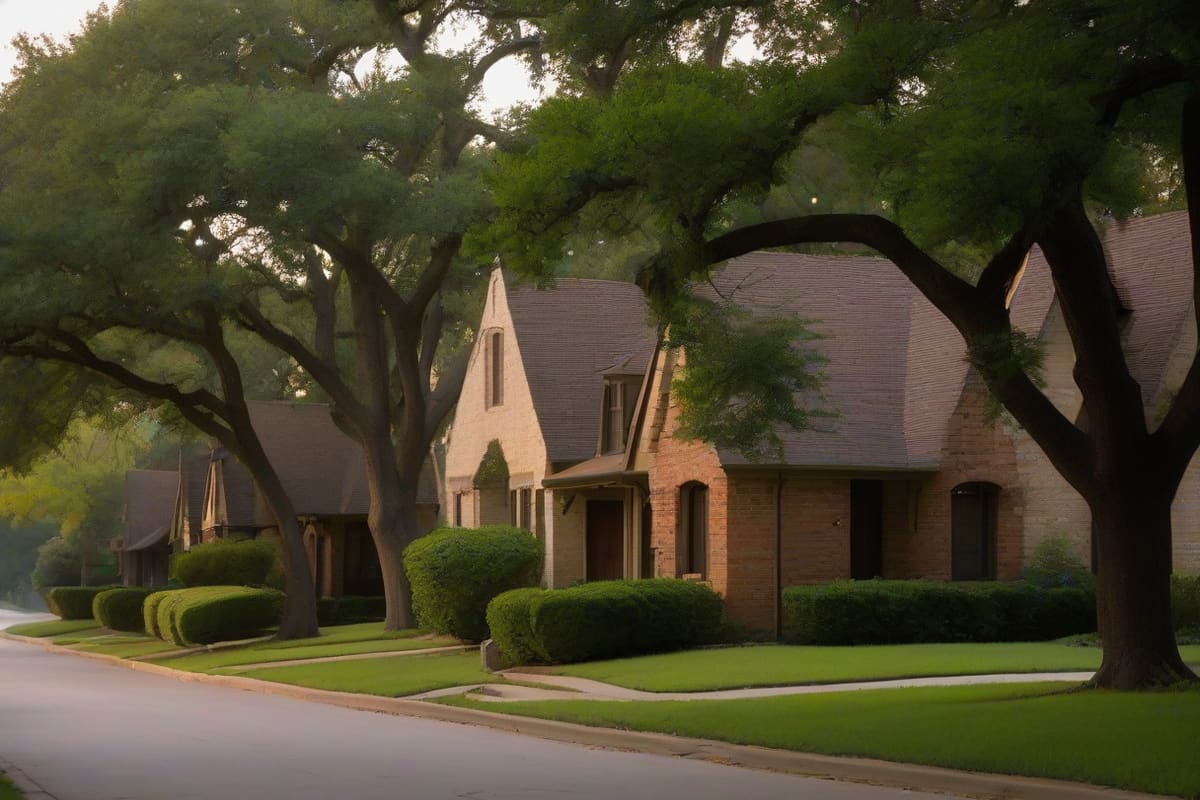
The M Streets, platted as Greenland Hills, is the most specific housing stock in the city. The McNeny brothers laid out roughly 98 acres of the former Bennett farm in 1923, following the land's topography, and Tudor Revival is the dominant style. The neighborhood association counted more than 65% of homes as Tudor Revival when the conservation district was proposed, and claims one of the largest authentic Tudor collections in Texas. Dallas City Council approved the conservation district in the early 2000s after a run of demolitions and oversized rebuilds, with sources dating it to 2002 or 2003, and the eastern portion later split off as M Streets East, which also includes Craftsman and Colonial houses. Boundaries run roughly between McCommas, Central Expressway, Greenville Avenue and Vanderbilt. Dallas ISD serves it. The conservation district is a financing fact: it constrains what you can add and how it must look, which constrains what a renovation appraisal can support.
Lakewood runs from Lower Greenville toward White Rock Lake, with 1920s through 1940s detached houses on larger lots than the M Streets, many of them pier-and-beam, in Dallas ISD.
Casa Linda sits east of White Rock Lake with mostly 1940s and 1950s detached houses, in Dallas ISD.
White Rock Lake itself is a 1,254-acre reservoir on White Rock Creek with a trail loop around it and the Dallas Arboretum on its eastern shore. The housing around it spans the 1920s through the 1960s.
Bishop Arts and North Oak Cliff, south and west of the Trinity River, combine early twentieth century detached housing on narrow lots with substantial new infill construction and a commercial district along Bishop and Davis. Dallas ISD serves it.
Kessler Park, west of Bishop Arts, holds 1920s and 1930s houses on hilly, irregular lots, including Tudor, Spanish Eclectic and Mediterranean Revival examples, with several blocks inside a conservation district. Dallas ISD.
Preston Hollow carries large lots, in places over an acre, with original 1940s through 1960s houses alongside replacement construction. Parts are in Dallas ISD, and the submarket is mostly above the conforming limit.
Highland Park and University Park are separate cities with their own municipal rates and Highland Park ISD, as covered above. Practically every purchase there is a jumbo loan.
Far North Dallas is the city's northern tier, built mostly between the 1960s and the 1980s, on conventional suburban lots, inside the City of Dallas but served in parts by Richardson ISD and in parts by Dallas ISD.
Richardson straddles the Dallas and Collin county line, with Richardson ISD serving parts of several cities, and 1950s through 1970s detached houses dominating the older sections.
Plano, on the metro's Collin County side, carries Plano ISD and Collin County rates with no Dallas College or Parkland lines, and has its own guide.
What breaks on a 1925 Dallas house, and which loan fixes it?
East Dallas and Oak Cliff hold the city's oldest detached housing, and four specific items come up repeatedly in the M Streets, Lakewood and the older Oak Cliff blocks.
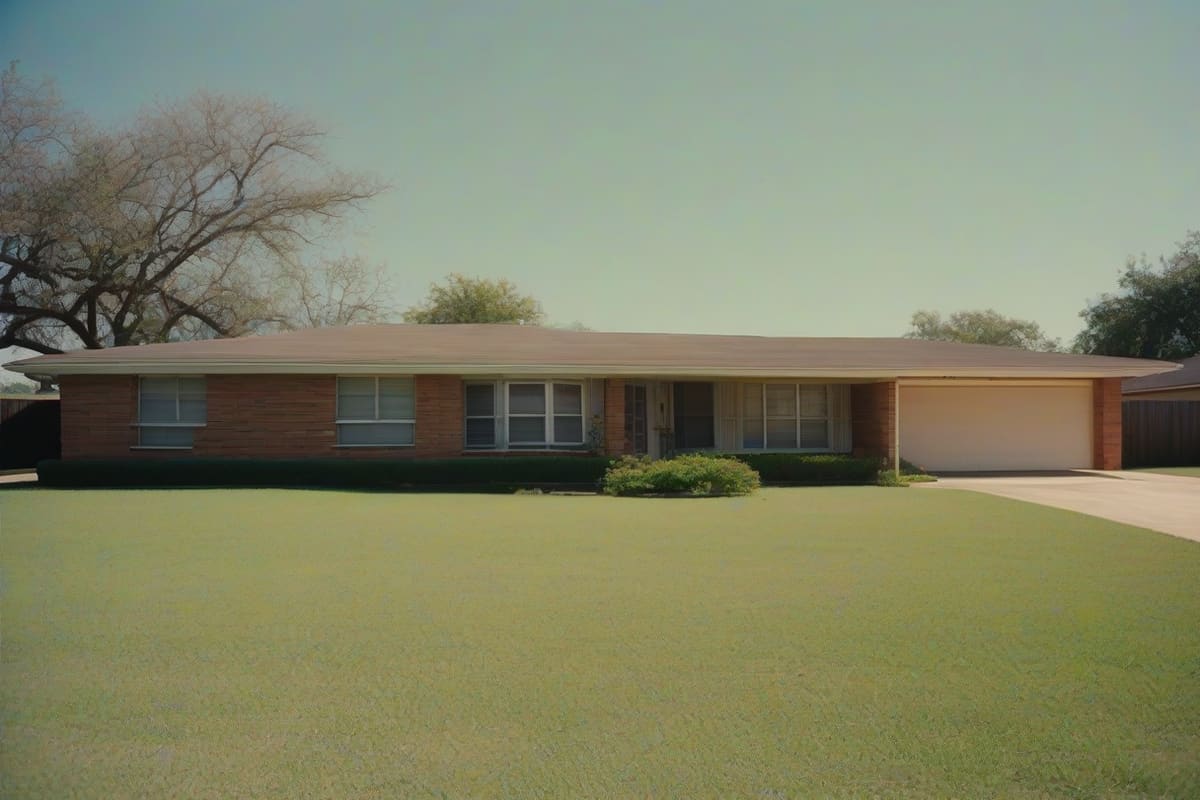
Pier-and-beam, not slab. Houses from the 1920s and 1930s in these areas commonly sit on brick or concrete piers with a wood floor structure and a crawl space. That construction is repairable in a way a failed slab is not, and it also hides things. An inspector who cannot get under the house has not inspected the foundation, and a seller who will not allow access has told you something. Shimming and leveling are routine maintenance. Rotted sills, failed piers and compromised beams are structural, and the line between them is a structural engineer's opinion rather than a general inspector's note.
Cast iron drain lines under a crawl space. The county guide covers cast iron corrosion generally. The specific point here is that under a pier-and-beam house, the drain line is accessible, which makes replacement far cheaper than it is under a slab. A sewer camera inspection during the option period turns a guess into a bid.
The electrical panel decides the insurance, and insurance is a closing condition. Certain panel brands installed through the 1960s and 1970s are declined outright by many carriers, and knob-and-tube wiring surviving in an attic or a wall cavity has the same effect. Get a homeowner's insurance quote during the option period rather than an estimate, because a declined application two days before closing is a cancelled closing. If one carrier declines, that is a data point and not a verdict, and your agent should shop it.
Conservation districts constrain the renovation, which constrains the appraisal. This is the piece that is specific to Dallas rather than to old houses generally. In Greenland Hills, M Streets East and parts of Kessler Park, the conservation district regulates height, setbacks, roof form and street-facing materials. A renovation mortgage is sized on the home's value after completion, supported by an appraisal of the planned scope rather than the current condition. If your scope includes a second story the district will not permit, the after-completion value supporting your loan rests on work that cannot be built. Get the district's rules and, where required, the city's approval path lined up before the appraisal is ordered. Dallas also has a historic property tax exemption program for designated landmark structures that can apply to qualifying rehabilitation, which is worth asking the city about on a landmark parcel.
The structure that handles all of this is a renovation mortgage that finances the purchase and the work in one loan, with the proceeds held and released in draws as the work is inspected. It fits this housing stock better than almost anywhere else in Texas, and compared to buying first and paying for the work later, it puts the repairs inside one approval. Conventional financing carries most of the renovation volume in this city.
When does a Dallas purchase become a jumbo loan?
The 2026 conforming loan limit for a one-unit property is $832,750. Above that figure, the loan is a jumbo and it is a different product with different underwriting.
In the Park Cities and in much of Preston Hollow, essentially every purchase clears that limit. Published 2026 medians for Highland Park, University Park and Preston Hollow vary widely between brokerage sources, from the high six figures in Preston Hollow's lower subareas to several million dollars in Highland Park, and the figures disagree enough that no single one belongs on this page as a fact. What is not in dispute is the direction. These submarkets sit above the conforming limit, consistently, across every source.
Jumbo loans differ from conforming loans in ways that have nothing to do with the number. Reserve requirements are measured in months of housing payments held after closing rather than waived. Credit standards are higher and pricing moves in tiers rather than smoothly. Documentation is full two-year documentation including K-1s, partnership returns and business returns where they apply, and underwriters read them rather than scanning them. Large loan amounts frequently require two appraisals or a field review of the first one, which adds a week. Asset documentation is more granular, and large deposits need sourcing. Self-employed borrowers and borrowers whose income arrives as distributions tend to need a longer runway on a jumbo file than on a conforming one, and starting the file three weeks before you expect to write an offer is the single most useful thing you can do.
FHA has its own ceiling, and Dallas County's is set above the national floor. HUD's 2026 national floor for a one-unit property is $541,287, and the Dallas County one-unit limit is published at $563,500 across lender references drawn from HUD's limits. HUD's own lookup is the authority on that figure, so confirm it there before relying on it.
For eligible veterans, VA loans carry no monthly mortgage insurance and reach high loan amounts for borrowers with full entitlement. In a county where the taxing stack runs as high as this one, the Texas disabled veteran property tax exemption is worth more over a hold than most of what happens on the loan side, and it is worth asking about even if you have never looked into it.
Investors buying Dallas rentals often fit DSCR loans, which qualify on the property's rent against its payment instead of personal tax returns. For buyers who need help with the cash to close, state and city programs reach Dallas addresses, and the specifics change with funding cycles. See down payment assistance programs for what is current, and keep in mind that layering assistance onto a purchase changes the underwriting, so it belongs in the conversation before you write an offer. If you want to compare across products rather than within one, we place every loan program on this list.
What is there to do in Dallas?
The Dallas Arts District is the largest contiguous urban arts district in the United States. It began in the early 1980s at 68 acres across 19 blocks and has since expanded to around 118 acres, and it holds one of the densest concentrations of buildings by Pritzker Prize-winning architects anywhere. The Dallas Museum of Art opened its Arts District building in 1984 as the district's first institution. The Nasher Sculpture Center, designed by Renzo Piano, puts a collection of twentieth century sculpture in a garden behind a glass pavilion. The Morton H. Meyerson Symphony Center, designed by I.M. Pei, is the home of the Dallas Symphony Orchestra, and the Winspear Opera House sits a block away.
Klyde Warren Park opened on October 27, 2012, on a deck built over the Woodall Rodgers Freeway between Pearl Street and St. Paul Street, supported by more than 300 concrete beams, covering around five acres of lawn, trees, a children's park and food trucks where there used to be a canyon between downtown and Uptown. Traffic still runs underneath it.
Deep Ellum was a center of blues and jazz recording in the 1920s and 1930s. Robert Johnson cut thirteen songs there on June 19 and 20, 1937, in a makeshift studio on the third floor of 508 Park Avenue, then the Dallas branch office of Brunswick Records, with Don Law producing and the sides issued on Vocalion. Those are among the last recordings he made. The building still stands inside the Harwood Street Historic District. The neighborhood's live music rooms still run most nights, and Pecan Lodge serves brisket there to lines that form before it opens.
Fair Park covers 277 acres east of downtown and holds the largest collection of 1930s art deco exposition architecture in the country, most of it built for the 1936 Texas Centennial Exposition. The State Fair of Texas runs there every fall, with Big Tex standing over the midway, fried food competitions that get national coverage, and the Cotton Bowl, which seats more than 90,000, hosting the Texas versus Oklahoma game in October.
White Rock Lake is a 1,254-acre reservoir formed by damming White Rock Creek, with a trail loop used by runners and cyclists year round, and the Dallas Arboretum and Botanical Garden on its eastern shore. The Katy Trail runs about three and a half miles on the former Missouri-Kansas-Texas rail line from near the American Airlines Center up past Southern Methodist University, and it is the spine of Uptown's outdoor life.
Reunion Tower stands 561 feet with an observation deck and a geodesic sphere that is the most recognizable thing on the skyline. The Perot Museum of Nature and Science sits at the edge of Victory Park with a glass-enclosed escalator on its exterior. The Sixth Floor Museum at Dealey Plaza occupies the former Texas School Book Depository and handles November 1963 with considerable care.
The frozen margarita machine was invented in Dallas in 1971. Mariano Martinez adapted a soft-serve ice cream machine for his restaurant, Mariano's Mexican Cuisine, after seeing a 7-Eleven Slurpee machine and realizing it would solve his consistency problem. He never patented it. The Smithsonian's National Museum of American History acquired the original machine in 2005, after 34 years of service.
The Dallas Mavericks play at the American Airlines Center in Victory Park, and the Dallas Stars play hockey in the same building. The Dallas Farmers Market, southeast of downtown, runs a weekend growers market and a daily food hall. Bishop Arts in North Oak Cliff holds several dozen restaurants and bars in a few blocks of early twentieth century storefronts. The Texas Theatre on West Jefferson Boulevard in Oak Cliff, open since 1931, screens repertory film in the room where Lee Harvey Oswald was arrested.

Frequently asked questions
What is the property tax rate in Dallas? There is no single rate. A Dallas parcel typically stacks the City of Dallas, Dallas County, the school district, Dallas College and the Parkland Hospital District, and some parcels add a public improvement district. The county adopted $0.248650 per $100 for tax year 2026, subject to a November 3, 2026 election. Pull a tax certificate on the specific parcel rather than using a city average.
Why is my tax bill higher than the listing said? The listing showed the seller's bill. Their exemptions ended at closing and the sale reset the appraised value to what you paid. If your lender escrowed against the seller's historical figure, your escrow account can run short and your payment gets recalculated at the first annual analysis. Ask to escrow against the expected post-sale value instead.
Are Highland Park and University Park part of Dallas? No. They are separate incorporated cities completely surrounded by the City of Dallas, with their own municipal governments and their own school district, Highland Park ISD. A mailing address reading Dallas does not establish which taxing units apply. Verify the municipality and the school district on the parcel, because buyers get this wrong regularly.
Can I get a mortgage on a Dallas high-rise condo? Usually yes, and the project gets reviewed alongside you. Fannie Mae retired the Limited Review path for applications dated on or after August 3, 2026, so most Dallas tower purchases now run a Full Review covering reserves, delinquencies, single-entity ownership, commercial space, litigation and critical repairs. Request the association's questionnaire, budget and reserve study on day one of your option period.
What makes a Dallas condo non-warrantable? Common causes are reserve funding below the guideline, more than 15% of units 60 or more days delinquent on assessments, one entity owning more than 20% of units in a project of 21 or more, nonresidential space above 35%, pending litigation involving the association, or unremediated critical repairs. Any one of those moves the loan from conventional to portfolio or non-QM financing.
Can I still buy a unit in a non-warrantable building? Yes, through a portfolio or non-QM lender that keeps the loan rather than selling it. Expect different pricing, a larger contribution, tighter reserves and a shorter list of willing lenders. Consider your exit as well, because a future buyer faces the same project review and the same limited lender list, which affects how quickly the unit resells.
How soon do the 2027 condo reserve rules affect me? Industry summaries of Fannie Mae's Lender Letter LL-2026-03 put the increase from 10% to 15% of annual budgeted assessment income on applications dated on or after January 4, 2027. If you are buying in a building whose board has held dues flat for years, ask whether the budget clears the new test, because the answer affects the project's eligibility and possibly a future assessment.
My employer is paying my closing costs. Does that cause a problem? It causes a problem only if it surprises your underwriter. A relocation benefit is an interested party contribution that must be disclosed at application, documented with the relocation policy letter, and tested against the contribution limit for your occupancy and transaction type. Whether the money goes to the settlement agent directly or reimburses you afterward changes the treatment, so hand over the letter early.
Can I buy in Dallas before my old house sells? Often yes, through a bridge loan against the departing home's equity, a line of credit drawn before you move, or a purchase qualified with both housing payments counted and reserves to match. An employer buyout or guaranteed offer program can sometimes be documented as a pending sale. Decide the structure before you write the offer, because it changes what you can qualify for.
Does rental income from my old house help me qualify? It can, with documents. Converting a departing residence to a rental generally requires an executed lease and evidence that the security deposit was received, and only a portion of gross rent is credited toward offsetting the payment. If the home is listed for sale rather than leased, expect the full payment to count in your ratios and expect a reserve requirement covering both properties.
Can I use restricted stock units as income? Generally only where shares have vested and been distributed to you without restriction, documented with a vesting schedule showing past and future vesting, brokerage statements, two years of W-2s and a current pay stub. Time-based awards typically need about a year of history with the employer and performance-based awards closer to two. A sign-on award of restricted stock that vests over time is usually not usable.
What is the conforming loan limit in Dallas County? $832,750 for a one-unit property in 2026. Above that the loan is a jumbo, with reserve requirements measured in months of payments after closing, higher credit tiers, full two-year documentation and sometimes a second appraisal. In the Park Cities and much of Preston Hollow, essentially every purchase exceeds the limit.
What is the FHA loan limit in Dallas County? HUD's 2026 national floor for a one-unit property is $541,287, and Dallas County's one-unit limit is published above that at $563,500 across lender references drawn from HUD's figures. HUD's own lookup is the authority, so confirm the current number there or with your loan officer before writing an offer at the top of that range.
Which Dallas school districts serve the city? Dallas ISD is the largest, opening fall 2026 with about 132,000 students according to KERA, which makes it the second-largest district in Texas. Highland Park ISD serves Highland Park and University Park. Richardson ISD serves parts of Far North Dallas, Richardson and other cities. Plano ISD serves Plano. Verify the attendance boundary on the parcel, because city boundaries and district boundaries do not match.
Should I buy in Dallas County or Collin County? They are different tax stacks and different housing stock. A Dallas parcel carries Dallas College and Parkland lines that a Collin County parcel does not, while much of Collin County's newer construction carries district assessments that older Dallas neighborhoods do not. The honest comparison is total monthly cost on two specific addresses with tax certificates pulled, not price per square foot.
What is a tax certificate and why do I need one? It is a document from the tax assessor listing every taxing unit that levies against a specific parcel and what each one charges. It costs very little and takes a day or two. It replaces the listing's tax line, which reflects the seller's exemptions and a capped value your purchase is about to reset, with the actual units on your property.
How old is most of the housing in East Dallas? Much of Lakewood, the M Streets and Lower Greenville dates from the 1920s through the 1940s, with pier-and-beam foundations and original drain lines common. Age alone does not block a loan. Condition does, mostly through insurability, so get a sewer camera inspection and a real homeowner's insurance quote during your option period rather than estimates.
Can I finance renovations on a historic Dallas house? Yes, through a renovation mortgage that funds the purchase and the work together and releases proceeds in draws as work is inspected. The loan is sized on value after completion, supported by an appraisal of the planned scope. In Greenland Hills, M Streets East and parts of Kessler Park, the conservation district limits height, setbacks and street-facing materials, so confirm the scope is permitted before the appraisal is ordered.
What slows down a Dallas closing? On a condominium, waiting on the association for the questionnaire, budget and reserve study. On a 1920s house, an insurance decline or a second sewer inspection. On a relocation file, a missing relocation policy letter. Thirty days is a normal target on a clean resale, and starting the loan file before you are under contract is what protects it.
Pull the tax certificate, and for a condo, start the association file today
Two documents resolve most of what goes wrong on a Dallas purchase. Order a tax certificate on the parcel so you are escrowing against real taxing units instead of the seller's old bill. If the property is a condominium, email the management company for the lender questionnaire, the current budget, the reserve study and a written statement on litigation and pending assessments on the first day of your option period, because that package takes longer to arrive than anything else in the file.
Send us the address and, if you have one, the relocation letter, and we will tell you which structure carries it. You can also book a call and we will go through the parcel with you.
Start your application · Run the numbers · Call 512-588-2771
Looking at a property in Dallas?
Send us the address and we will model the real payment — taxes, insurance and HOA included — before you write an offer.
Nearby & Related