Bank Statement Mortgage Loans in Austin, TX
Qualify using 12-24 months of bank deposits instead of tax returns — built for self-employed borrowers and business owners whose tax returns don't reflect their real cash flow.
Built for how self-employed income really works
Who this loan is for
Freelancers, contractors, real estate agents, and small business owners who show strong deposits but a tax return that doesn't reflect it. If your income instead comes from rental properties, see our DSCR loan program.
Bank statement loan FAQ
How bank statement loan income is calculated
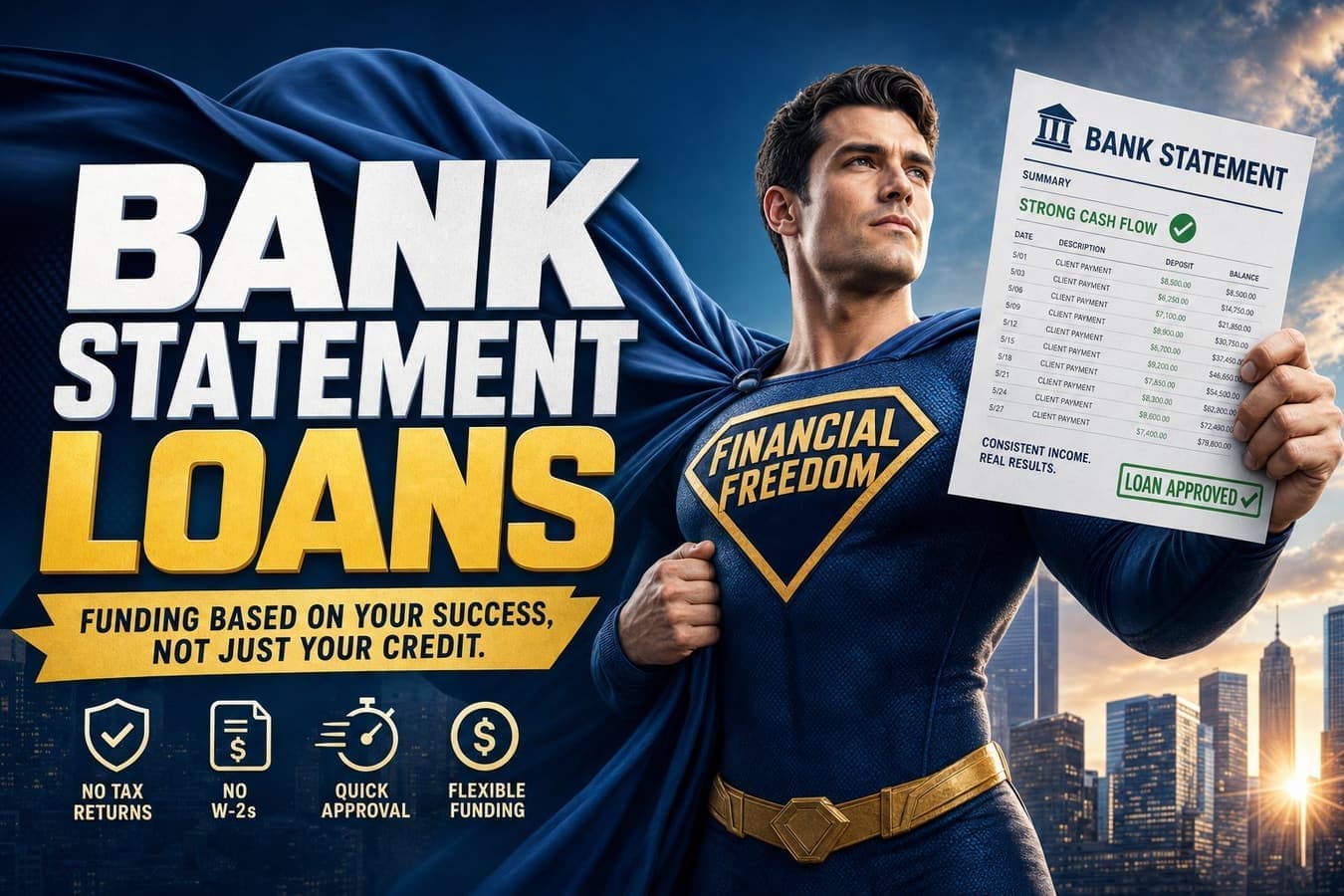
Rather than averaging the net income on your tax returns, a bank statement mortgage looks at 12 or 24 months of deposits. Lenders typically apply an expense factor to business account deposits — recognizing that a portion of gross revenue covers operating costs — or use personal account deposits at a higher qualifying percentage. The result is a qualifying income figure that reflects the cash actually moving through your accounts, which is often dramatically higher than the taxable income your CPA reports after deductions.
Who these loans are built for
Bank statement loans exist for borrowers with real financial strength and non-traditional documentation: business owners, 1099 contractors, real estate agents, consultants, restaurant and service business operators, and gig-economy professionals. Austin's economy is full of exactly these borrowers, and many of them have been declined by a retail bank purely because of how their tax returns look on paper.
Typical bank statement loan terms
Expect down payments starting around 10-20% depending on credit profile and loan size, credit score requirements that are more flexible than jumbo conventional financing, and both fixed-rate and interest-only structures depending on the program. Bank statement loans work for primary residences, second homes and investment properties, and can be used for purchases, rate-and-term refinances and cash-out refinances.
Documents to gather before you apply
Have your most recent 12-24 months of bank statements ready, along with a business license or CPA letter confirming your self-employment and ownership percentage. You will not need tax returns, W-2s or profit-and-loss statements for most programs. Our loan officers review your statements up front and tell you the qualifying income figure before you formally apply, so there are no surprises later in underwriting.
Related Programs