Rent vs. Buy in Austin: Which Makes More Sense in 2026?
The honest answer depends on how long you plan to stay, what your money would otherwise earn, and how stable your income is — not on whether renting is “throwing money a
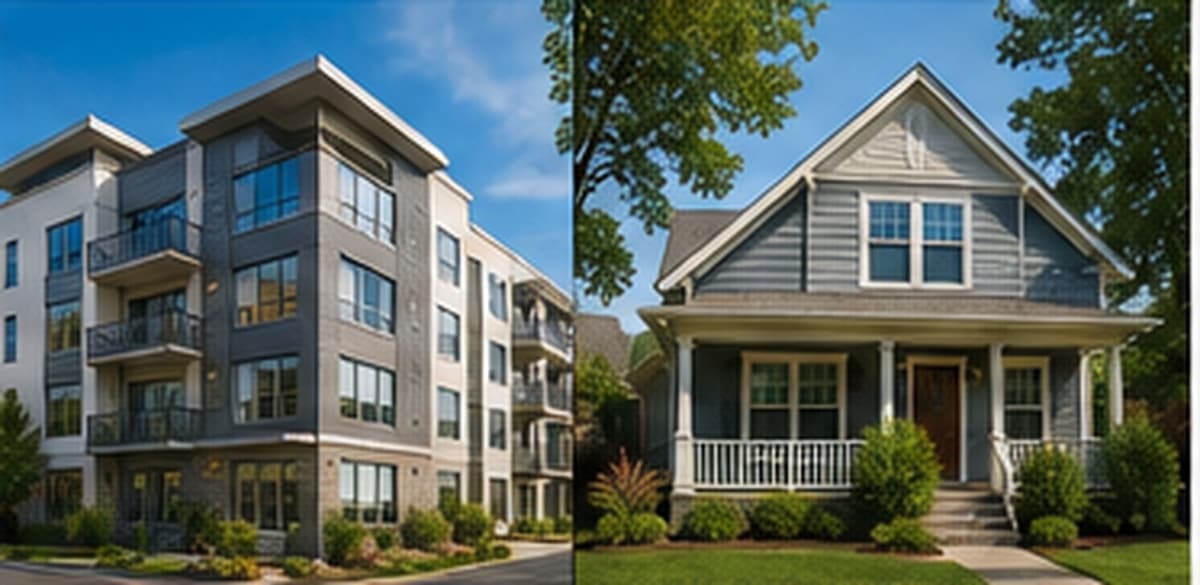 way.”
way.”
The framing most people get wrong
The phrase "renting is throwing money away" has done more damage to homebuying decisions than almost any other piece of conventional wisdom. It is not accurate, and it pushes people to buy before they are ready.
Renting buys you something real: housing, flexibility, and freedom from maintenance costs and market risk. Owning buys you something different: forced savings through principal paydown, exposure to appreciation, tax treatment, and a payment that stops rising the way rent does. Neither is inherently superior. The right question is which trade you want given your specific situation.
The one variable that matters most: time
Buying a home carries substantial transaction costs on both ends. You pay closing costs going in — lender fees, title, appraisal, prepaid escrows — and you pay agent commissions and closing costs going out. Those costs are real money that appreciation and principal paydown have to overcome before ownership beats renting on pure math.
The conventional rule of thumb is that you need to stay somewhere in the range of three to five years for buying to make financial sense, though the actual number moves with your rate, your local appreciation rate, and how your rent compares to a mortgage payment on a similar property. If you are reasonably confident you will be in the same metro for five-plus years, the calculus tilts strongly toward buying. If your job or life situation could move you in eighteen months, renting is usually the better financial decision, not the lesser one.
What owning actually costs beyond the payment
First-time buyers routinely compare rent against a principal-and-interest figure and conclude that owning is cheaper. It usually is not, once you count everything.
Property taxes. This matters enormously in Texas. Texas has no state income tax, and property tax rates here run high as a result — often well above two percent of assessed value annually depending on your taxing jurisdictions. On a $400,000 Austin-area home, that alone can add many hundreds of dollars per month to the payment.
Homeowner's insurance. Required by every lender, and Texas premiums run above the national average due to hail, wind and storm exposure.
Mortgage insurance. If you put down less than twenty percent, you will carry PMI on a conventional loan or MIP on an FHA loan. Conventional PMI cancels as you build equity; FHA mortgage insurance often does not.
Maintenance and repairs. A common planning figure is one to two percent of the home's value annually. Some years you spend nothing; the year the HVAC fails you spend a great deal. Renters simply call the landlord.
HOA dues. Common in newer Austin-area subdivisions and in condos, and they only go up.
What renting actually costs you
The honest counterweight: rent rises, and it rises indefinitely. A fixed-rate mortgage payment's principal and interest portion never changes for thirty years. Taxes and insurance do rise, but the largest component of the payment is locked. Ten years into a fixed mortgage, an owner is frequently paying meaningfully less than a renter in a comparable property — and by year thirty the owner's housing cost drops dramatically while the renter's has compounded the entire time.
Renters also build no equity. Every principal dollar in a mortgage payment is money moving from your income into your net worth. It is not a return in the investment sense, but it is forced savings, and for many households it is the single most effective savings mechanism they will ever participate in.
The opportunity cost nobody calculates
Here is the argument sophisticated renters make, and it deserves a fair hearing. A down payment plus closing costs is a large amount of capital. If that money were invested in a broad market index instead, it would compound. If the difference between a rent payment and a total ownership payment were also invested every month, that compounds too.
Over long horizons, a disciplined renter who genuinely invests the difference can end up in a comparable position to an owner. The catch, borne out repeatedly, is that most people do not actually invest the difference. They spend it. A mortgage enforces the savings discipline that willpower usually does not.
Austin-specific considerations for 2026
Austin's market has cooled from its pandemic-era intensity into something more balanced, which changes the math in buyers' favor in several ways. Inventory is healthier than it was, negotiating room exists on many listings, and sellers are more willing to contribute toward closing costs or fund a rate buydown — a concession that was nearly impossible to obtain a few years ago.
At the same time, prices remain elevated relative to local incomes, and rates in the mid-six-percent range mean the payment on a given price is substantially higher than it was in 2021. Suburbs like Kyle, Buda, Hutto, Pflugerville and parts of Georgetown offer materially lower entry prices than central Austin, and several outlying areas qualify for USDA financing with no down payment at all.
When renting is clearly the right answer
Rent if you might relocate within two to three years. Rent if your income is new, variable, or unproven, and you would be stretching to make the payment. Rent if you have no emergency reserve beyond your down payment — because the first major repair will put you on a credit card at twenty-plus percent. Rent if you are actively paying down high-interest debt, which will improve both your rate and your qualifying amount when you do buy. Rent if you genuinely do not know which part of town you want to live in.
When buying is clearly the right answer
Buy if you expect to stay five or more years and your income is stable. Buy if you can cover the down payment and closing costs and still keep several months of reserves afterward. Buy if a total payment — including taxes, insurance and mortgage insurance — sits comfortably within your budget rather than at the edge of it. Buy if you want a fixed housing cost you control rather than one your landlord resets annually. And buy if you qualify for assistance that meaningfully reduces your cash to close.
The step most people skip
Almost everyone runs this decision on assumptions: an imagined rate, a guessed payment, a down payment number they believe is required. Those assumptions are frequently wrong in the buyer's favor.
A pre-approval is free and produces actual numbers — your real rate, your real qualifying amount, and a full payment breakdown including taxes and insurance. It also surfaces whether you qualify for Texas down payment assistance, which provides three to five percent of the loan amount as a grant or deferred lien and changes the cash-to-close picture entirely for many first-time buyers. Make the rent-versus-buy decision against real figures, not estimates.