Travis Heights Mortgage Broker: Garage Apartments, Rental Income and Older Homes
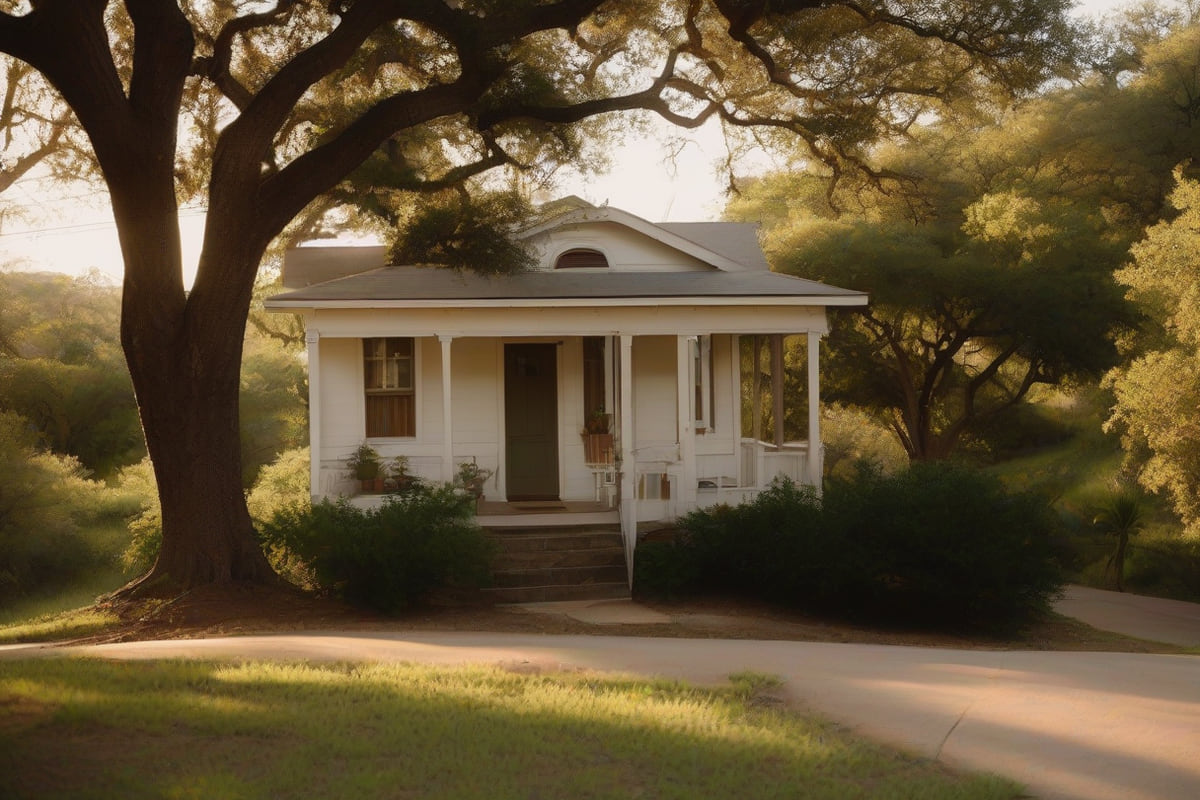
Travis Heights homes generally trade above $1 million, on hilly, tree-covered streets immediately south of Lady Bird Lake between South Congress and I-35.
Two features of the housing stock shape nearly every loan here. Many lots carry a garage apartment or a second small dwelling behind the main house, and much of the original stock dates from the 1910s through the 1940s, built on pier-and-beam foundations over sloping ground.
Both affect how much you can borrow and what an appraiser will say, and both are worth understanding before you write an offer.
Buying or refinancing in Travis Heights? We shop your file across a panel of wholesale lenders.
Can the garage apartment help you qualify?
It depends on what the property legally is, and that is the first thing to establish.
If the property is a legal two-unit property
When a lot is recorded and permitted as two dwelling units, it is financed as a two-unit property. If you live in one unit, a percentage of the other unit's market rent typically counts as qualifying income, and the conforming loan limit is higher than for a single-family home.
This is the most favorable structure, and it is worth confirming with the city's permit history rather than the listing description.
If it is a single-family home with an accessory unit
Most Travis Heights garage apartments are accessory dwelling units on a single-family property. Here the rules are narrower:
Some conventional programs now allow part of an accessory unit's rent to count, usually capped as a share of your total qualifying income and requiring the appraiser to support the rent with comparable accessory units.
Other programs give the rent no credit at all, and the loan is underwritten on your income alone.
The unit must be legal and habitable. An appraiser will note whether it appears permitted, and that note matters.
If the unit was never permitted
Unpermitted garage conversions are common in older Austin neighborhoods. The consequences:
The appraiser may give the space little or no value, which can leave the appraisal short of the contract price.
The rent will not count toward qualifying under any mainstream program.
Insurance can be a problem, because some carriers will not cover a rented structure they did not know was a dwelling.
None of this makes the house unbuyable. It changes the price you should pay and the income you should plan on. Ask for permit records during the option period.
Pier-and-beam, slopes and older systems
Much of Travis Heights sits on pier-and-beam foundations, where the house rests on piers above a crawl space rather than on a slab. It is a sound and repairable design, but the inspection is different.
Crawl space moisture on hillside lots can rot beams and invite pests. Look for standing water, ventilation and vapor barriers.
Leveling — shimming or replacing piers — is routine maintenance on pier-and-beam houses. A foundation specialist's estimate converts a vague concern into a number you can negotiate with.
Original systems in houses of this age often include cast iron or clay drain lines, older wiring and minimal insulation. Budget for them, and consider a renovation loan if the list is long — our Barton Hills page explains how those work.

Taxes in Travis Heights
A Travis Heights address inside the City of Austin carries the City of Austin, Travis County, Austin ISD, Austin Community College and Central Health rates — generally around 1.8% to 2.1% of assessed value combined.
A rented unit affects the homestead. The homestead exemption applies to the part of the property you occupy; a separately rented dwelling is assessed without it.
Budget on the post-sale assessed value. A sale resets the appraisal, and the seller's exemptions end at closing.
Verify the parcel with the Travis Central Appraisal District.
Where people buy
The blocks just south of Riverside Drive, closest to the lake, carry some of the highest land values and the most dramatic grade changes.
The streets around Stacy Park follow Blunn Creek through the middle of the neighborhood and hold much of the oldest housing stock.
Toward South Congress, lots become smaller and the neighborhood meets the SoCo commercial strip; see our South Congress page for the condominium market there.
Toward I-35 and Oltorf, the mix includes more duplexes and small multi-unit buildings, which bring the two-unit financing rules above into play.
The neighborhood
Travis Heights was laid out in the 1910s on the bluffs south of the Colorado River, and it developed gradually through the following decades — which is why a single block can hold a 1920s cottage, a 1940s bungalow and a modern rebuild side by side.
Stacy Park runs north to south along Blunn Creek, linking two neighborhood pools: Big Stacy, a heated outdoor pool open through the winter, and the wading pool at Little Stacy.
The neighborhood is bounded roughly by Lady Bird Lake to the north, South Congress Avenue to the west and I-35 to the east, which puts downtown across the river within walking distance of the northern blocks.
Not sure which fits? Compare every loan program we place.
Frequently asked questions
Does rent from a garage apartment count toward qualifying for a mortgage? On a legal two-unit property where you live in one unit, a percentage of the other unit's market rent usually counts. On a single-family home with an accessory unit, some conventional programs allow part of the rent within a cap; others allow none.
What happens if the garage apartment is not permitted? The appraiser may give it little or no value, the rent will not count toward qualifying, and some insurers will not cover it as a rental. Check the city's permit history during the option period.
Is a pier-and-beam house harder to finance? No. Pier-and-beam is a standard foundation type. What matters is its condition, so get a foundation specialist's estimate for any leveling or repairs.
Can I use a duplex in Travis Heights as my primary residence? Yes. Living in one unit of a two-unit property lets you use owner-occupant down payments and count part of the other unit's rent.
What are property taxes in Travis Heights? A typical City of Austin address in Austin ISD carries a combined rate around 1.8% to 2.1% of assessed value. A separately rented unit is assessed without the homestead exemption.
Find out what the back unit is worth before you pay for it
In Travis Heights, the garage apartment can add real borrowing power or none at all. Send us the address and we will tell you how the property is recorded and how each program would treat it.
Start your application · Run the numbers · Call 737-347-1314
Looking at a property in Travis Heights?
Send us the address and we will model the real payment — taxes, insurance and HOA included — before you write an offer.
Nearby Areas
Nearby & Related