Fort Worth Mortgage Broker: Home Loans in Tarrant County
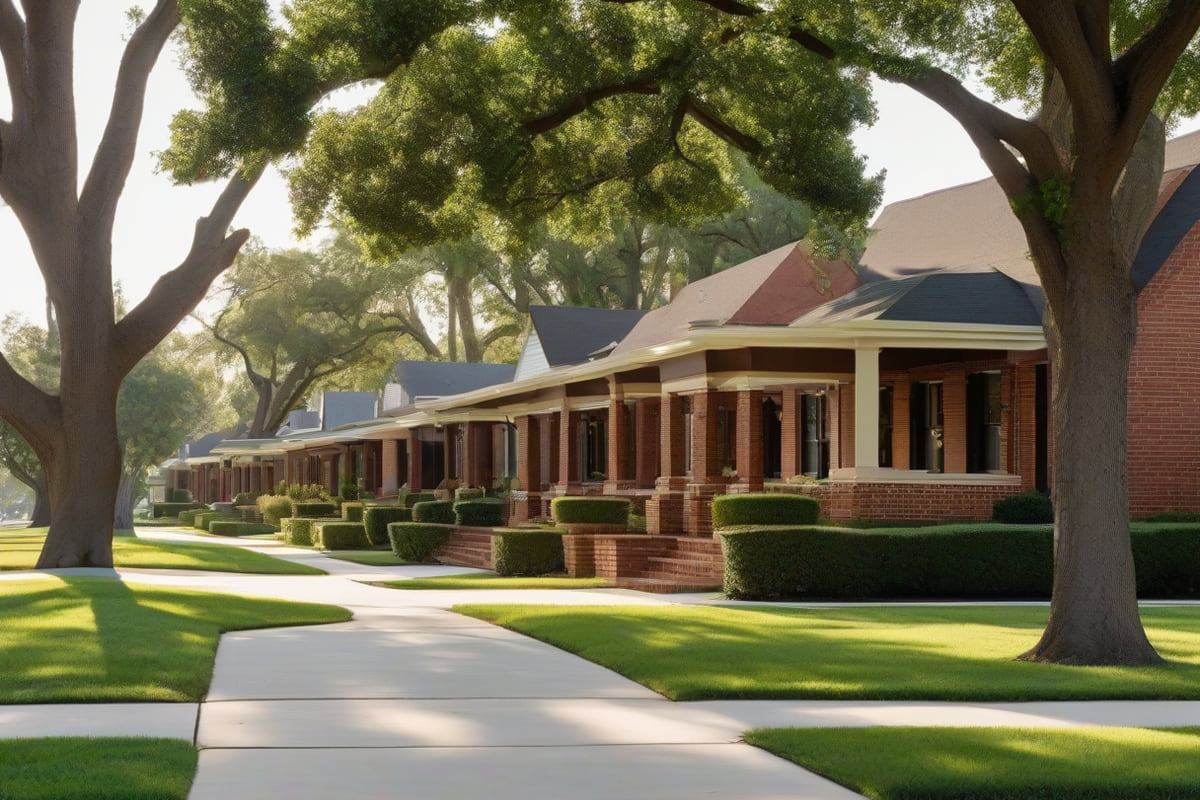
Fort Worth reached 1,028,117 residents as of July 1, 2025, and added 19,512 people in that one year, the second-largest numeric gain of any city in the United States, according to the Census Bureau's Vintage 2025 estimates released May 14, 2026. Nearly all of that growth lands in new subdivisions on the north and west edges of the city. That is why the hardest Fort Worth mortgage questions are not about credit. They are about financing a house that does not exist yet, in a subdivision where the comparable sales are already out of date.
This page covers the mechanics of that: how a builder's preferred lender credit is actually priced, why a new-build appraisal comes in under contract, how escrow gets set wrong when the first tax bill covers the lot alone, how to hold a rate across a long build, what a PID or MUD assessment does to the loan amount you qualify for, how the Tarrant Appraisal District protest works from a homeowner's side, and where a conventional loan stops working as you move west toward Parker County. The Tarrant County lending guide covers the county-wide picture. This one is about the city.
Buying or refinancing in Fort Worth? We shop your file across a panel of wholesale lenders.
What do Fort Worth's housing numbers actually say?
Fort Worth's median sale price has moved very little for two years while inventory has rebuilt. The Fort Worth Report, using Greater Fort Worth Association of Realtors data, put the city's June 2026 median at $335,975 on 1,067 closed sales with 3.8 months of inventory. That is a market with real choice in it and very little price momentum.
The longer view agrees. GFWAR's mid-year report put the Fort Worth median for January through June 2026 at $333,068, with Tarrant County as a whole at $350,528 and neighboring Denton County at $434,748. Earlier in the year, DFW Agent Magazine reported the February 2026 Fort Worth median at $337,390, up 2.2% year over year, after a January median of $323,500. Prices that swing by $14,000 between January and February are telling you about the mix of houses that closed, not about a market moving.
Zoom out to the metro and the Texas Real Estate Research Center at Texas A&M, in its Texas Housing Insight published September 18, 2026 on July data, had the Dallas-Fort Worth-Arlington metro at a 4.6-month supply, with sales down 1.5%, active inventory down 4.3%, and prices down 0.2% year over year. The same report noted that the Fort Worth-Arlington division specifically posted a fourth consecutive month of year-over-year price gains, which is the cleanest statement available that the western half of the metro has held up better than the eastern half. Statewide in that report, the median was $339,000, unchanged from a year earlier, homes sold in July averaged 63 days on market against 61 a year before, and active inventory sat at a 5.5-month supply. The research center has described a three to four month supply as the balanced range.
The construction numbers are where Fort Worth separates from everywhere else in the state. The city's own development reports, as covered by the Fort Worth Report, counted 5,950 residential building permits in 2025, down about 1% from 5,986 in 2024, while applications to build new houses rose 23%. Multifamily permits fell hard in the same period, to 146 from 256. Then single-family picked back up: the city's March 2026 development activity report showed 1,597 new single-family permits for January through March, up 15.5% from 1,383 in the same quarter of 2025, and reporting through April 2026 put the year-to-date figure at 2,267 against 2,000 a year earlier, a 13.4% increase.
At the metro level, a Construction Coverage analysis of Census Building Permits Survey data ranked Dallas-Fort Worth first among major metros for total housing permits in 2024 at 71,788 units, and the National Association of Home Builders' roll-up of the same survey through June 2025 put Dallas-Fort Worth-Arlington second nationally for single-family permits at 22,599, behind Houston. For a buyer, the practical consequence is simple. In large parts of Fort Worth, your competition is not another offer. It is a builder down the street with twelve more lots and an incentive budget.
How does a builder's preferred lender credit actually work?
A production builder in north or west Fort Worth will usually offer money to use its affiliated mortgage company. That money is real, it is often worth taking, and it is almost never the whole story. The builder cannot require you to use the affiliate, and it has to disclose the affiliation to you in writing.
Here is what the incentive usually is in practice. It is a closing cost credit, a temporary or permanent rate buydown paid by the builder, a design center allowance, or some combination. The budget behind it is a line item the builder has already priced into the house. That is the first thing worth understanding, because it means the incentive is not free money layered on top of a market price. It is part of how the house is priced.
The second thing is that the credit has conditions. In Fort Worth's fast-moving sections, incentives are commonly tied to a specific lot, a specific inventory home, or a close-by date at the end of a quarter. Miss the date and the incentive can shrink or disappear. Read the addendum, not the flyer.
The third thing is the comparison itself. Ask both lenders for a Loan Estimate issued the same day, for the same program, the same cash contribution, and the same lock length. The form exists so that comparison is possible, and it only works when all four variables match. A credit that looks large can be funded by pricing on the note itself, which costs more across any holding period you would realistically plan for than it saves at the closing table. Compare the credit and the pricing together, in one view, or you are not comparing anything.
Two Fort Worth specifics that catch people out on builder contracts:
Builders use their own purchase contracts, not the standard TREC resale form. The protections you may expect from a resale transaction, including an appraisal contingency and a traditional option period, are frequently absent or heavily rewritten. Your earnest money and any design center deposit may be non-refundable well before closing.
Ask in writing what happens to the incentive if you bring your own financing. Some builders move the money to price or to upgrades. Some withdraw it entirely. Some will keep part of it. The answer varies by builder, by community, and by month, and a verbal answer from a sales agent is worth nothing when the closing statement prints.
We will price the same loan against a builder's offer line by line and tell you plainly if theirs is better. That happens often enough that it is worth asking.
Why does a new construction appraisal come in under contract price?
Because the appraiser is valuing your house against sales that closed before the builder's last three price increases, and often without the document that explains what you actually bought.
Work through it. In a subdivision selling forty homes a year, the closed sales available to the appraiser are three to eight months old. If the builder has raised base prices twice and added a lot premium since those homes went under contract, the recent closings understate current base pricing by design. The appraiser can use contract data and under-construction sales in some cases, and a competent one will, but the weight those carry is limited and varies by lender.
Then there is the options problem. Your contract price is a base price plus structural options plus design center selections plus a lot premium. An appraiser does not credit a $12,000 flooring upgrade at $12,000 of value, because the market does not. Structural options such as additional square footage, a third bay, or a covered patio carry contributory value that is measurable. Finish selections usually do not carry it dollar for dollar. If nobody sends the appraiser the itemized options addendum and the lot premium breakdown, they cannot even try.
What to do about it is procedural, not emotional. Make sure the lender's appraisal order includes the full contract, every addendum, the options sheet with pricing, the plat showing the lot, and the builder's list of recent closings and current pending contracts in the same section. If the value still comes in short, there is a reconsideration of value process. It works on new comparable sales and factual errors, not on arguments about what the house is worth to you.
Understand the consequence on a builder contract, which is where this gets expensive. Without an appraisal contingency, a low appraisal does not release you. It changes the loan amount, because the lender lends against the lower of value or price. The gap becomes cash, or a renegotiation the builder is not obligated to accept, or a lost earnest money deposit. Have that conversation with us before you sign, not after the appraisal lands.
One more wrinkle. Builder-paid closing costs and rate buydowns are sales concessions. Agency and government guidelines cap how much a seller can contribute, and the cap varies by program and by occupancy. An incentive package larger than the applicable limit does not vanish, but the excess may have to be restructured, applied as a price reduction, or redirected into upgrades. That is a conversation to have while the package is being written.
Why did my escrow come up short in year two?
Because the first tax bill after a new build is frequently assessed on the lot alone, and the second one covers the finished house. Nothing went wrong. The escrow account was funded against a number that was never going to repeat.
The sequence runs like this. The Tarrant Appraisal District values property as of January 1. A house that was a slab or a frame on that date is assessed as land and partial improvement. Your builder's cost estimate, and sometimes your lender's initial escrow calculation, may use that figure because it is the only real tax record the parcel has. Then the following January 1 arrives with a finished house on the lot, TAD puts the improvement on the roll, the tax bill roughly triples, and the escrow analysis that lands a few months later shows a shortage plus a higher monthly collection going forward.
Two things change the outcome, and both happen before you close:
Ask for escrow to be set on the expected finished value rather than the lot-only bill. Build the account against the assessed value you actually expect, using the purchase price and the applicable rates as the estimate. The payment is higher from month one and it stays stable. Most people prefer that to a step change in year two.
File the homestead exemption for the year you occupy. For the 2026 tax year the school district residence homestead exemption is $140,000 of assessed value, raised from $100,000 by Proposition 13, which Texas voters approved in November 2025 and the Legislature implemented through Senate Bill 4. Homeowners who are 65 or older or who are disabled receive an additional $60,000 against school taxes. The exemption also activates the cap that limits annual growth in a homestead's appraised value to 10% plus the value of new improvements. The form is Texas Comptroller Form 50-114, filed with the appraisal district.
The arithmetic matters more in Fort Worth than in most Texas cities because so much of the stock is new. Tarrant County commissioners adopted a county rate of 18.6 cents per $100 of value for 2026, down from 18.62 cents, alongside an $834 million budget, per the Fort Worth Report's September 15, 2026 coverage. Tarrant County College trustees set 12 cents per $100 in September 2026, up from 11.228 cents. The Tarrant County Hospital District held its rate at 16.5 cents. Published rate tables put the City of Fort Worth near 67 cents and Fort Worth ISD near $1.08, which lands most Fort Worth homesteads a little above 2.2% of assessed value before any special district charge. Those are the units stacked on your bill, and the school rate is the biggest single piece of it.
Pull the parcel's tax certificate rather than relying on a listing's tax figure or a county average. On a new build, the listing figure is frequently the lot.
How do you finance a house that has not been built yet?
Three structures cover almost every Fort Worth build, and which one you need depends on who owns the lot.
If you are buying a production home from a builder on the builder's lot, you are getting an ordinary purchase loan. The builder carries its own construction financing, you close once, at completion, on a finished house with a certificate of occupancy and a final inspection. Your file sits open for months, which has its own consequences discussed below, but the loan itself is conventional, FHA, VA, or jumbo in the normal way.
If you own the land or are buying a lot and hiring a builder, construction-to-permanent financing closes once and converts. You close before construction, the lender disburses to the builder on a draw schedule tied to inspections, you pay interest on the drawn balance during the build, and at completion the loan converts to permanent financing without a second closing and a second set of costs. Lenders approve the builder as well as the borrower, which means licensing, insurance, references, and a reviewed contract with a fixed price or a transparent cost-plus structure. They also require a contingency reserve, because change orders are not optional in practice and an unfunded overrun stops a build.
A two-closing structure separates the interim construction loan from the permanent financing. It is more total cost and it re-exposes you to qualifying and pricing at the second closing, which is why the single-close version is usually preferred. It is still sometimes the right answer, mostly on custom builds with unusual scopes or non-standard construction, and for owners whose land equity is the cash contribution.
A few things are true across all of these. Land equity counts toward your contribution when you already own the lot, and how much counts depends on how long you have held it and how it was acquired. The appraisal is made from plans and specifications before construction and reviewed at completion, so an incomplete spec book means an unreliable value. And no lender funds the permanent phase on a house that cannot be occupied, which means the certificate of occupancy is on the critical path for your lock, not just for your move.
How do you hold a rate across a nine-month build?
With an extended lock, and by understanding that the length is a product you are buying rather than a courtesy you are asking for.
The mechanism works like this. A standard lock covers a resale closing within the usual window. A build that completes in six, nine, or twelve months needs a lock designed for that horizon, and the cost of the extra time is priced into the lock. Longer costs more. That is the entire trade, and it is the trade worth examining honestly, because the alternative is floating and accepting whatever the market does by the time the inspector signs off.
Ask about these four things by name:
A float-down provision. It lets you capture an improved market during construction, usually once, usually within defined parameters. It is priced into the lock, so you are buying optionality rather than receiving it.
The extension cost and the extension mechanism. Completion dates in Fort Worth slip for city inspections, trade availability, materials, and weather. You want to know what an extension costs and how many days it buys before you need one, not during the week your lock expires.
What happens if the lock expires entirely. Re-locking usually means being repriced at current market, sometimes with a worst-case provision that takes the less favorable of the original and the current market. That provision is the one that hurts, and it is the one people do not read.
Whether the lock is portable. If your builder's delay becomes a cancellation, or you move to a different lot in the same community, what survives.
Practical guidance: pad the builder's completion date. A builder's estimate on a slab poured in spring is an estimate. Lock to the date you believe, not the date on the sales agreement, and ask us to model the cost of the extra sixty days against the cost of one extension. Usually the pad is cheaper.
What do PID and MUD assessments do to your loan amount?
They reduce it. Not just the comfort of the payment, the amount itself, because a lender counts the assessment in your debt-to-income ratio exactly like a tax.
Fort Worth's growth was financed with districts, and in the far north and far west you should assume one applies until you confirm otherwise.
A Public Improvement District assessment repays bonds issued to build the streets, water lines, drainage, and sometimes the parks in a specific subdivision. It is often a fixed annual amount per lot rather than a rate against value, it runs for a defined term that can stretch decades, and it is levied on top of city, county, school, college, and hospital district taxes. Walsh Ranch sits inside City of Fort Worth Public Improvement District No. 16, created September 27, 2016, which is the kind of detail that only appears when someone goes looking for it.
A Municipal Utility District levies its own tax rate for the same purpose. Because it is a rate rather than a flat charge, it moves with your assessed value, and it can decline over time as the district's debt amortizes and its tax base grows.
Texas law requires a seller to give you notice of a PID obligation before you are bound, and MUD notice obligations run through the Water Code. Read the notice for three numbers: the current annual assessment, the remaining term, and whether the assessment can be prepaid. Prepayment is sometimes available and whether it is worth doing depends on the balance, the remaining years, and what else the cash would do.
The buying consequence is concrete. Two houses at the same price, a mile apart, one inside a district and one outside, carry materially different monthly costs and therefore different qualifying amounts. In north Fort Worth along the Alliance corridor, out toward Haslet and the Northwest ISD and Eagle Mountain-Saginaw ISD boundaries, and in the newer sections west of Loop 820, this is the single most common reason a payment quote changes between the first conversation and the closing disclosure. Ask for the district disclosure and the current assessment before you write the offer, and have it built into the payment from the start.
How does a Tarrant Appraisal District protest work?
TAD mails a Notice of Appraised Value in the spring, and the deadline to protest is printed on it. For 2026 that date was May 15, or 30 days after the notice was delivered, whichever was later. The Fort Worth Report noted on May 13, 2026 that roughly 200,000 Tarrant County homes appeared to be assessed above likely market value heading into that deadline, which is a useful reminder that the burden of checking sits with the owner.
The process has three stages, and most protests end at the first one.
TAD runs an online account system where you add your property and file. In recent cycles the district has offered an automated value negotiation tool that compares your evidence against neighborhood sales and returns a settlement offer, which many owners accept without ever speaking to anyone. If you do not settle there, you can take an informal review with an appraiser, and if that does not resolve it, a formal hearing before the Appraisal Review Board.
Two arguments carry weight. Market value, meaning the district's number is above what the property would sell for, supported by closed sales of comparable properties. And unequal appraisal, meaning your property is assessed higher than a representative sample of comparable properties after adjustments, which is a separate statutory ground and sometimes the stronger one on a tract home in a uniform subdivision.
For a recent buyer, the strongest single piece of evidence is your own closing statement. If you paid less than the district's value, that is a market transaction on the exact property, and it is hard to argue with. Keep it, and keep the appraisal from your purchase.
Three things to understand about how this touches your mortgage. A successful protest lowers your escrow requirement, which lowers your payment at the next analysis rather than immediately. The 10% homestead cap limits growth in appraised value but not in the market value the district records, so a capped property can carry a gap that closes when you sell. And the seller's exemptions end at closing, which is why the first bill after a purchase is routinely higher than the figure on the listing.
When does a conventional loan stop working on acreage west of Fort Worth?
Usually not at a particular number of acres, which surprises people. Agency guidelines do not set a hard acreage cap. The loan breaks on highest and best use, on site value as a share of total value, and on what the outbuildings are for.
As you move west from Benbrook and Aledo toward the Parker County line, the stock shifts from subdivision lots to five, ten, and twenty-acre tracts with barns, arenas, loafing sheds, and pipe fencing. Here is where conventional financing starts to strain:
Highest and best use has to be residential. If the appraiser concludes the property's best use is agricultural or commercial, or that it would be marketed as a ranch rather than as a house with land, conventional residential financing is the wrong instrument regardless of how the house looks.
Site value as a proportion of total value draws scrutiny. There is no fixed threshold in guidelines, but when the land is worth substantially more than the improvements, underwriters look harder and some investors decline. A modest house on twenty acres of improved pasture is a different file from a large house on five.
Outbuildings carry limited contributory value. An indoor arena, a six-stall barn with a wash rack, or a 3,000 square foot shop may have cost real money and may be exactly why you want the property. An appraiser credits what the market pays for it in that area, which is frequently a fraction of cost, and lenders for residential financing sometimes exclude income-producing agricultural improvements entirely.
Income-producing use complicates it further. Boarding horses, hay sales, or a commercial training operation moves the property toward a business use, and residential underwriting does not accommodate that well.
An agricultural valuation on the tax roll can trigger a rollback if the use changes after you buy, which is a cash exposure at an unpredictable time. Ask the appraisal district what the parcel's current use designation is and what a change would cost.
Septic and well requirements are the other common snag. Most of these tracts are on an on-site sewage facility and many are on a private well. Government programs apply specific standards: a water quality test from a certified lab, minimum separation distances between a well and septic components, documented legal access to the water source, and recorded shared well agreements where a well serves more than one property. Conventional financing is more permissive but the appraiser still has to call the systems adequate, and an unpermitted septic or a well with no documentation will hold up a file. Get the OSSF permit record and a current water test during the option period.
When conventional does not fit, the alternatives are real. Land and lot loans from portfolio lenders handle bare acreage and holding periods. Farm credit institutions and local portfolio banks underwrite rural residential property with acreage and outbuildings on their own guidelines rather than agency rules, and they can value a barn the way a buyer does. Construction-to-permanent financing works on a tract you already own, with the land equity as your contribution. And parts of Parker County and the western fringe of Tarrant County fall inside USDA eligible areas, though the maps are redrawn and eligibility has to be checked by address rather than assumed. Compare the full set of programs rather than forcing one structure onto a property it does not fit.
One practical note on appraisals out here. Ask that the assignment go to an appraiser with acreage competency in Parker and west Tarrant. An urban residential appraiser handed a twelve-acre tract with an arena is the most common cause of a value that makes no sense to anybody.
Where do people buy in Fort Worth?
The city runs roughly 30 miles north to south, and build eras change completely as you move through it. School district boundaries do not follow city limits, which is the single most consequential verification on any Fort Worth address.
Near Southside and Magnolia Avenue sit immediately south of downtown, around the medical district, with early 1900s housing on small platted lots and a commercial spine of restaurants and music venues along Magnolia. Fort Worth ISD.
Fairmount, formally the Fairmount-Southside Historic District, is the large historic neighborhood in that same area. It was listed on the National Register of Historic Places in 1990 with a boundary increase in 1999, covers somewhere between about 340 and 375 acres depending on which boundary description you use, and the city's nomination survey counted 1,016 contributing buildings. It is commonly described as one of the largest historic districts in the southwestern United States. The stock is Craftsman and Queen Anne, mostly built between roughly 1900 and 1930, on narrow lots with deep front porches, and exterior work visible from the street goes through a Certificate of Appropriateness review. Your loan does not care about that review. Your repair scope does, because a scope that will not be approved is a scope you cannot draw against.
Ryan Place runs south of Fairmount with larger early-century houses on bigger lots along Elizabeth Boulevard. Fort Worth ISD.
The Cultural District sits west of downtown and is where the museums are. Arlington Heights, Monticello, and the streets around Camp Bowie Boulevard hold 1920s through 1950s brick and stone construction on established lots with mature trees, within walking or short driving distance of the Kimbell and the Modern. Fort Worth ISD.
The TCU area, south and west of the Cultural District, mixes early and mid-century housing with substantial infill and rebuilds, and carries a rental component tied to the university. Fort Worth ISD.
Westover Hills is a small separately incorporated town surrounded by Fort Worth, west of the Cultural District, with large lots and the highest price points in the immediate area. It has its own city government and its own tax rate, and most of it sits in Fort Worth ISD. This is where jumbo financing is routine rather than occasional.
Alliance and far north Fort Worth run along I-35W around the AllianceTexas development, with masonry two-story production homes on grid-platted streets, young trees, and district assessments on a large share of the subdivisions. Depending on the address, the school district is Northwest ISD, Eagle Mountain-Saginaw ISD, Keller ISD, or Fort Worth ISD, and the boundaries interleave in ways that make address-level verification non-negotiable.
Walsh Ranch is the large master-planned community west of Loop 820 on the old Walsh family ranch land, variously reported at roughly 7,200 to 7,500 acres with about 2,300 acres set aside as open space. The Real Deal reported in July 2025 that roughly 1,000 homes had been built against a projected 15,000 to 18,000 at full buildout. It is zoned to Aledo ISD and sits inside City of Fort Worth PID No. 16.
Benbrook is a separate city southwest of Fort Worth on Benbrook Lake, with 1960s through 1990s stock, larger lots than inner Fort Worth, and Fort Worth ISD serving most of it.
Aledo is a separate city on the Parker County side, west of Benbrook, where subdivision lots give way to acreage. Aledo ISD.
Keller sits in northeast Tarrant County, incorporated separately, with 1990s and 2000s construction on larger suburban lots, Keller ISD, and prices that support conventional and jumbo financing.
Saginaw is a separate city north of Fort Worth along I-820 and the rail corridor, with 1970s through 2000s housing and Eagle Mountain-Saginaw ISD.
For every one of these, pull the parcel record and confirm the school district, the city, and any special district by address. Two houses on opposite sides of one street can sit in different districts with different rates.
What is there to do in Fort Worth?
Enough that the city's draw is not an abstraction. Start with the thing no other city has.
The Fort Worth Stockyards runs a longhorn cattle drive down East Exchange Avenue twice a day, every day, with real steers and real drovers. Billy Bob's Texas is in the same district, a dance hall on a scale that has to be seen, with a bull riding arena inside it. The Stockyards is the direct descendant of the Chisholm Trail stop the city grew from, and the "Where the West Begins" motto on the signs is a claim the place actually earns.
The Cultural District is unusual for a city this size. The Kimbell Art Museum occupies Louis Kahn's 1972 building, which is on most short lists of the best museum buildings ever constructed, with a later pavilion by Renzo Piano across the lawn. The Modern Art Museum of Fort Worth, by Tadao Ando, sits a block away. The Amon Carter Museum of American Art, with its Remington and Russell holdings, completes the group. Three major museums within a few blocks of each other, all free or inexpensive to enter, is not something most American cities can offer.
The Fort Worth Stock Show and Rodeo runs in January and February, and the 2026 edition ran January 16 through February 7, 23 days across Dickies Arena, the Will Rogers Memorial Coliseum, and the surrounding grounds. It is the oldest continuously running livestock show in the country and it reorganizes the city's calendar every winter.
The Van Cliburn International Piano Competition is held in Fort Worth on a four-year cycle at Bass Performance Hall downtown. The 2025 competition was won by Hong Kong pianist Aristo Sham, announced in early June. For two weeks the city fills with pianists and the broadcast audience is global.
The Fort Worth Water Gardens, Philip Johnson's 1974 concrete terraces and cascades, sit at the south end of downtown near Sundance Square, the restored commercial blocks that function as the city's central plaza. The Fort Worth Botanic Garden, the oldest major botanic garden in Texas, includes a Japanese garden with koi ponds and a conservatory. The Trinity Trails system, managed by the Tarrant Regional Water District, runs more than 100 miles of connected paved trail along the river and its forks, which is how a lot of people get to work on a bike here.
Dickies Arena, which opened in 2019 next to the Will Rogers complex, hosts the rodeo, concerts, and NCAA events. For barbecue, Goldee's Bar-B-Q on the far southeast side ranked third on Texas Monthly's 2025 Top 50 list, having held the number one spot in 2021, and Panther City BBQ in the Near Southside also made the 2025 list along with Hurtado and Sabar BBQ. Magnolia Avenue in the Near Southside is the restaurant and bar corridor people actually walk.
Which loan programs fit Fort Worth purchases?
Conventional financing handles most of the new construction volume, with the 2026 conforming limit at $832,750 for a one-unit property. It is the program that pairs with builder incentive structures most cleanly and the one where mortgage insurance falls away as equity builds.
FHA financing carries a meaningful share of Fort Worth's first-purchase volume, especially in the central, east, and south parts of the city. The 2026 national floor is $541,287 and HUD publishes the county-specific figure. FHA is the right tool when credit history or documentation depth is the constraint, and it applies property condition standards that matter on pre-1978 housing, including lead-based paint requirements.
VA financing is heavily used here. Naval Air Station Joint Reserve Base Fort Worth, on the former Carswell Air Force Base site on the west side, supports Navy, Marine Corps, Air Force Reserve, and Texas Air National Guard units, and Lockheed Martin Aeronautics adjoins it. For eligible borrowers VA is usually the strongest structure available on cash required at closing and it carries no monthly mortgage insurance, with the funding fee waived entirely for veterans receiving compensation for a service-connected disability. The Texas disabled veteran property tax exemption scales with disability rating and reaches a full homestead exemption at 100%, which against a combined rate above 2% is one of the largest recurring benefits in Texas homeownership. Reserve and Guard eligibility rules differ from active duty on required service, so confirm entitlement before you shop.
Jumbo financing appears in Westover Hills, parts of the TCU area, and the larger Keller and Walsh Ranch product above the conforming limit.
Renovation financing, meaning FHA 203(k) or Fannie Mae HomeStyle, finances a purchase and the repairs together against the after-improvement value. It is the right structure on the pre-1940 stock in Fairmount, Ryan Place, and the Historic Southside, and on anything where the condition standards would otherwise block the loan.
Land, lot, and portfolio programs cover the acreage files west toward Aledo and Parker County where agency rules do not reach.
Down payment and closing cost assistance reaches Fort Worth through the City of Fort Worth's homebuyer assistance program for income-qualified buyers inside the city limits, and through TDHCA and TSAHC statewide, including the Homes for Texas Heroes program for teachers, first responders, and veterans. Some builders will not accept an assistance lien alongside their own incentive, so confirm that before you sign.
If you already own here and rates or your situation have moved, refinance options include removing mortgage insurance once equity supports it, which happens faster than people expect in a market where the appraisal district has been raising values.
Frequently asked questions
Do I have to use the builder's lender in Fort Worth? No. A builder can offer an incentive for using its affiliated mortgage company and has to disclose the affiliation, but it cannot make the sale conditional on it. Ask what happens to the incentive if you bring your own lender, get the answer in writing, then compare Loan Estimates issued the same day for the same program and lock length.
Why did my new construction appraisal come in below the contract price? Usually because the closed comparable sales are months old and predate the builder's recent price increases, and because design center selections do not convert to value dollar for dollar. Make sure the appraiser receives the full contract, the itemized options addendum, the lot premium, and the builder's current pending contracts. A reconsideration of value is available on new comparables or factual errors.
What is a PID assessment and will it affect what I qualify for? A Public Improvement District assessment repays bonds issued to build a subdivision's streets, water, and drainage. It is charged in addition to your regular property taxes, often as a fixed annual amount over a long term. Lenders count it in your debt-to-income ratio, so it reduces the loan amount you qualify for, not only the comfort of the payment.
How long should I lock a rate on a Fort Worth build? Long enough to cover a realistic completion date with margin, because re-pricing after a lock expires is usually worse than paying for the extra time up front. Ask about the cost per additional month, the extension mechanism, any float-down provision, and what happens if the lock lapses entirely. Then pad the builder's estimated date.
Why is my property tax bill so much higher in the second year? Because the first bill probably covered the lot. The Tarrant Appraisal District values property as of January 1, so a house still under construction on that date is assessed as land. Once the finished improvement hits the roll, the bill and the escrow both jump. Ask your lender to escrow on the expected finished value from the start.
When is the deadline to protest my Tarrant County appraisal? The date is printed on your Notice of Appraised Value. For 2026 it was May 15, or 30 days after the notice was delivered, whichever was later. You can file through the Tarrant Appraisal District's online account system, settle through its automated value tool, take an informal review, or go to a formal Appraisal Review Board hearing.
How much is the Texas homestead exemption in 2026? The school district residence homestead exemption is $140,000 of assessed value for the 2026 tax year, raised from $100,000 by Proposition 13, which voters approved in November 2025. Owners who are 65 or older or disabled get an additional $60,000 against school taxes. Filing also activates the 10% annual cap on growth in your homestead's appraised value.
Is my Fort Worth address in Fort Worth ISD? Not necessarily. Fort Worth addresses also feed Keller ISD, Northwest ISD, Eagle Mountain-Saginaw ISD, Aledo ISD, Crowley ISD, Everman ISD, Birdville ISD, and others, and the boundaries do not follow city limits. Verify by street address with the district, because the school rate is the largest line on your tax bill.
Can I get a mortgage on 15 acres near Aledo? Often yes, but not always with a conventional loan. The questions are whether highest and best use is residential, how much of the total value sits in the land, whether the outbuildings are agricultural or residential in character, and whether the well and septic documentation is complete. When agency guidelines do not fit, portfolio and farm credit lenders underwrite acreage on their own rules.
What do lenders require for a private well and septic system? Government programs typically require a water quality test from a certified laboratory, documented legal access to the water source, a recorded agreement where a well is shared, and minimum separation distances between the well and septic components. Conventional financing is more flexible, but the appraiser still has to find both systems adequate. Pull the on-site sewage facility permit record during the option period.
Do I own the mineral rights when I buy a house in Fort Worth? Frequently not. The Barnett Shale runs under Tarrant County and the mineral estate has been severed from the surface on a large share of parcels, sometimes decades ago. It shows up as an exception in Schedule B of your title commitment. It rarely stops a loan, but ask your title company directly whether minerals convey before your option period ends.
Does a gas well near the property affect the loan? It affects the appraisal more than the approval. An appraiser will note proximity to a wellhead, pipeline, or compressor station and may adjust value accordingly. Lenders close conventional, FHA, and VA loans on properties with severed mineral estates in Tarrant County constantly.
Can I finance a house in the Fairmount historic district that needs work? Yes, and renovation financing is usually the right structure, because it funds the purchase and the repairs together against the after-improvement value. The sequencing matters here: confirm that the Certificate of Appropriateness review will approve your exterior scope before you finalize contractor bids and before the appraiser values the house on plans.
Can I use a VA loan near NAS JRB Fort Worth? Yes, for eligible service members, veterans, and many Reserve and Guard members. VA carries no monthly mortgage insurance and the funding fee is waived for veterans receiving compensation for a service-connected disability. Reserve and Guard required service differs from active duty, so get your Certificate of Eligibility confirmed before you shop.
Is it cheaper to own in north Fort Worth than in the central city? Sometimes the purchase price is lower and the monthly cost is not, because a district assessment can erase the difference. Compare total monthly cost on two specific addresses, including the special district charge and the actual school rate, rather than comparing price per square foot across parts of the city.
What is the median home price in Fort Worth? The Fort Worth Report, citing Greater Fort Worth Association of Realtors data, put the June 2026 median at $335,975 with 3.8 months of inventory, and the association's mid-year figure for January through June 2026 was $333,068. Other trackers using different windows and methods report numbers in a similar range. Prices have been close to flat for two years.
Send us the address before you sign the builder's paperwork
In Fort Worth the parcel decides the payment. School district, special district assessment, the lot-only tax record on a new build, and the mineral exception can move the real monthly cost a long way from what a sales office quotes.
Send us an address and the builder's incentive sheet. We will pull the appraisal district record, identify any district assessment, model the actual payment on the finished value, and price the same loan against the builder's offer line by line.
Start your application · Run the numbers · Call 512-588-2771
Looking at a property in Fort Worth?
Send us the address and we will model the real payment — taxes, insurance and HOA included — before you write an offer.
Nearby & Related