Amarillo Mortgage Broker: Home Loans in Potter and Randall County
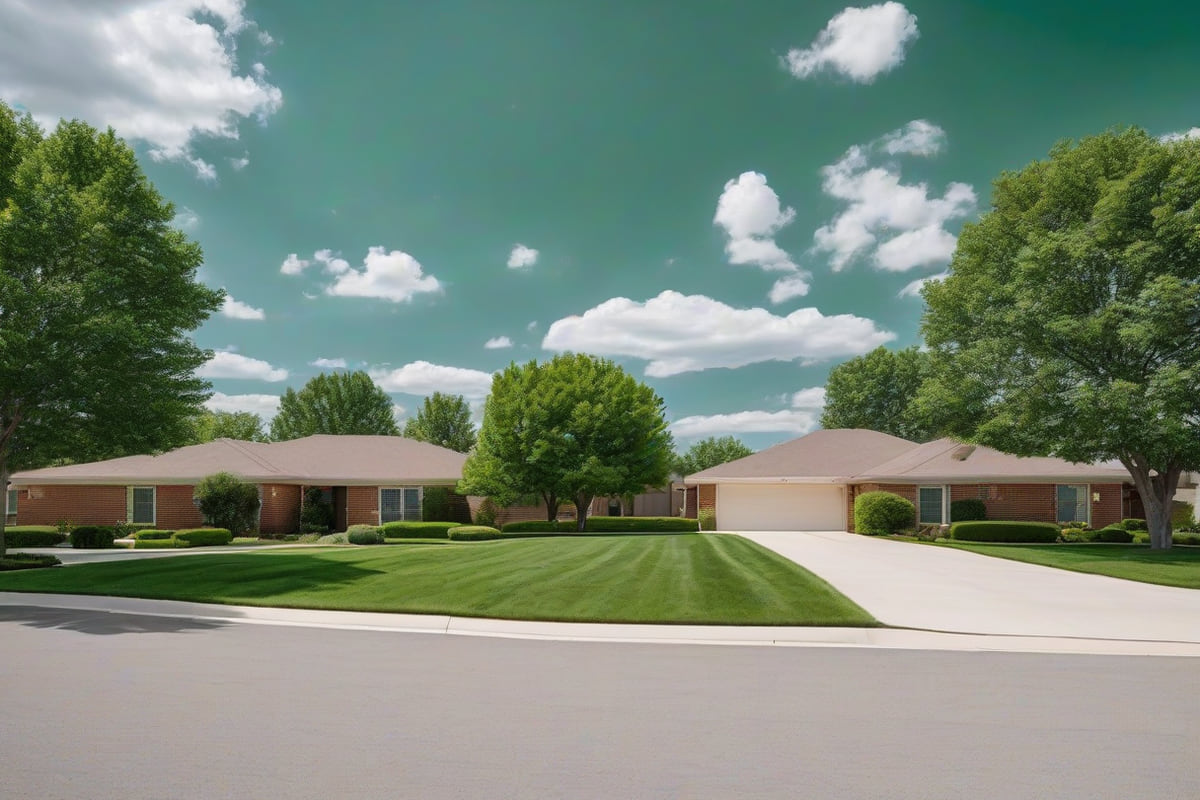
Amarillo is split down the middle by a county line, and which side of it you buy on changes your tax bill for as long as you own the house.
Potter County holds the northern half of the city. Randall County holds the southern half. Two appraisal districts, two county tax rates, two sets of overlapping jurisdictions — and a combined rate difference that is large enough to change what you qualify for.
Buyers here often know the line exists and treat it as a preference. It is better understood as a number.
The Potter–Randall line
The boundary runs roughly along a line through the middle of the city, and it does not follow neighborhoods or major roads in a way anyone would guess from a map.
What changes when you cross it:
| Potter County side | Randall County side | |
|---|---|---|
| Appraisal district | Potter-Randall AD | Potter-Randall AD |
| County tax rate | Potter County | Randall County |
| Typical school district | Amarillo ISD | Amarillo ISD or Canyon ISD |
| Hospital district | Amarillo Hospital District | none comparable |
The two counties share a single appraisal district — the Potter-Randall Appraisal District appraises both — but the taxing entities are separate, and that is where the money is.
The largest single driver is the hospital district. Property in the Potter County portion of Amarillo falls inside the Amarillo Hospital District levy; the Randall County portion generally does not. Stack that with a different county rate and, in the southern reaches, a different school district, and combined rates across the city run roughly 1.9% to 2.5% depending on where the parcel sits.
On a $280,000 home, half a percentage point is about $1,400 a year — roughly $117 a month. That lands in your escrow, which lands in your qualifying ratio, which decides your approval amount.
Pull the parcel before you write. The Potter-Randall Appraisal District record shows every taxing entity for a specific address. There is no citywide average worth relying on.
One more local wrinkle: Canyon ISD serves a substantial share of south Amarillo despite Canyon being a separate city to the south. An Amarillo mailing address tells you nothing about the school district, and school district is the largest line on the bill.
Wind and hail, and the deductible that is not a dollar amount
The Texas Panhandle sits in one of the most active hail corridors in North America, and this is the insurance conversation that actually matters here.
Most buyers read their policy's deductible as a dollar figure. On wind and hail in this market, it usually is not.
A percentage deductible applies a percentage of the dwelling coverage amount — commonly 1%, 2% or 5% — rather than a flat sum, and it applies specifically to wind and hail claims while a separate flat deductible covers everything else.
Concretely: on a home insured for $300,000 with a 2% wind and hail deductible, a hail claim carries a $6,000 deductible. The same policy might carry a $2,500 flat deductible for a kitchen fire.
Why this belongs in a mortgage conversation:
It changes the premium, and the premium is escrowed. Accepting a higher percentage deductible lowers the premium, lowers your escrow, and improves your qualifying ratio. It also means a larger cash exposure when a storm comes through. That is a real trade and it should be a decision rather than a default.
Roof age and material drive both price and availability. Carriers in the Panhandle have tightened considerably on older roofs. Some will write only actual cash value on a roof past a certain age — meaning depreciated value rather than replacement cost — which can leave a very large gap after a hail event. Impact-resistant shingles frequently earn a premium credit substantial enough to matter.
Get a real quote during the option period, not an estimate. Ask three questions specifically: the wind and hail deductible as a percentage, whether the roof is covered at replacement cost or actual cash value, and the property's claim history.
The housing stock and what it means for financing
Amarillo built out in recognizable eras, and each brings its own underwriting pattern:
Pre-war stock in the older central neighborhoods, including some substantial homes along the Route 66 corridor. Original wiring, plaster and pier-and-beam foundations are common, and renovation financing is frequently the right structure.
1950s through 1970s brick ranch across most of the city — the bulk of the inventory, generally straightforward purchases, with roof age and original electrical panels the usual inspection findings.
1990s onward on the southwest and southern edges, largely Randall County and often Canyon ISD.
Acreage at the margins, moving quickly into well and septic territory. Wells bring testing requirements on FHA, VA and USDA; an on-site sewage facility needs permit evidence and sometimes an inspection.
A local note on foundations: the Panhandle's soils are generally less expansive than the blackland clay of North and Central Texas, so the foundation conversation here is typically milder than it is in Dallas or Mesquite. Wind-driven moisture and drainage are the more common issues.
Programs that fit this market
Amarillo's price points sit comfortably inside most program limits, which keeps essentially every option open:
FHA financing at a low down payment, widely used here.
Conventional loans at 3% to 5% down, which avoids FHA mortgage insurance persisting for the life of the loan.
VA loans for eligible veterans — no down payment, no monthly mortgage insurance, and the Texas disabled veteran property tax exemption, which against rates in this range is worth a great deal.
USDA loans on eligible properties outside the city limits at zero down. Coverage across the surrounding Panhandle counties is broad — verify by address.
Down payment assistance through TDHCA and TSAHC, plus Mortgage Credit Certificates. More on assistance.
Where people buy
Southwest Amarillo along Soncy and Hillside holds most of the newer development and the higher end of the market, largely Randall County.
Wolflin and Olsen Park are established central neighborhoods with some of the city's better preserved pre-war and mid-century housing.
The Historic Route 66 district along Sixth Street runs through San Jacinto, with older stock and steady reinvestment.
North Amarillo in Potter County holds the most affordable entry inventory in the city.
Canyon, a separate city to the south, and the unincorporated areas around it, bring larger lots, Canyon ISD, and West Texas A&M University's rental market.
The city
Amarillo was founded in 1887 as a railroad town and took its name — Spanish for yellow — from a nearby creek and the soil along it.
Palo Duro Canyon, roughly 25 miles southeast, is the second largest canyon system in the United States at about 120 miles long and up to 800 feet deep. The state park there stages Texas, an outdoor musical drama that has run every summer since 1966.
Cadillac Ranch, the row of ten Cadillacs buried nose-down in a field west of town, was installed in 1974 and remains one of the most photographed roadside installations in America.
The Big Texan Steak Ranch and its 72-ounce steak challenge, the American Quarter Horse Hall of Fame and Museum, and the restored Historic Route 66 district along Sixth Street cover most of what brings visitors.
The economy runs on beef processing, the Pantex Plant northeast of the city, Bell Textron helicopter assembly, wind energy across the surrounding counties, and the BNSF rail corridor.
Not sure which fits? Compare every loan program we place.
Frequently asked questions
Does it matter whether my Amarillo home is in Potter or Randall County? Yes, financially. The two counties levy different rates, and the Potter County portion of the city generally falls inside the Amarillo Hospital District levy while the Randall County portion does not. Combined rates run roughly 1.9% to 2.5% depending on the parcel.
Which appraisal district covers Amarillo? Both counties are appraised by the Potter-Randall Appraisal District, but the taxing entities are separate. One appraisal district, two sets of tax rates.
Is all of Amarillo in Amarillo ISD? No. A substantial part of south Amarillo is in Canyon ISD. An Amarillo mailing address tells you nothing about the district, and the district is the largest line on the bill — verify by address.
What is a percentage deductible on wind and hail? A deductible calculated as a percentage of your dwelling coverage — commonly 1%, 2% or 5% — rather than a flat dollar amount, applying specifically to wind and hail claims. On a $300,000 dwelling limit, a 2% deductible means $6,000 out of pocket on a hail claim.
Does my roof affect my insurance here? Significantly. Carriers have tightened on older roofs, and some will write only actual cash value rather than replacement cost past a certain age. Impact-resistant shingles often earn a meaningful premium credit.
How does the insurance premium affect my loan? It is escrowed with your taxes, so it is part of your monthly payment and part of your qualifying ratio. A higher wind and hail deductible lowers the premium and improves the ratio, at the cost of more cash exposure after a storm.
What are property taxes in Amarillo, TX? Roughly 1.9% to 2.5% combined, depending on county, hospital district and school district. Pull the specific parcel from the Potter-Randall Appraisal District.
Get the parcel and the insurance quote together
In Amarillo these two numbers move your payment more than anything a lender controls, and both are knowable before you are under contract.
Send us an address and we will pull the taxing entities and tell you what to ask an agent for.
Start your application · Run the numbers · Call 737-347-1314
Looking at a property in Amarillo?
Send us the address and we will model the real payment — taxes, insurance and HOA included — before you write an offer.
Talk To A Loan OfficerNearby Areas
Nearby & Related