Abilene Mortgage Broker: Acreage, Rural and Home Loans
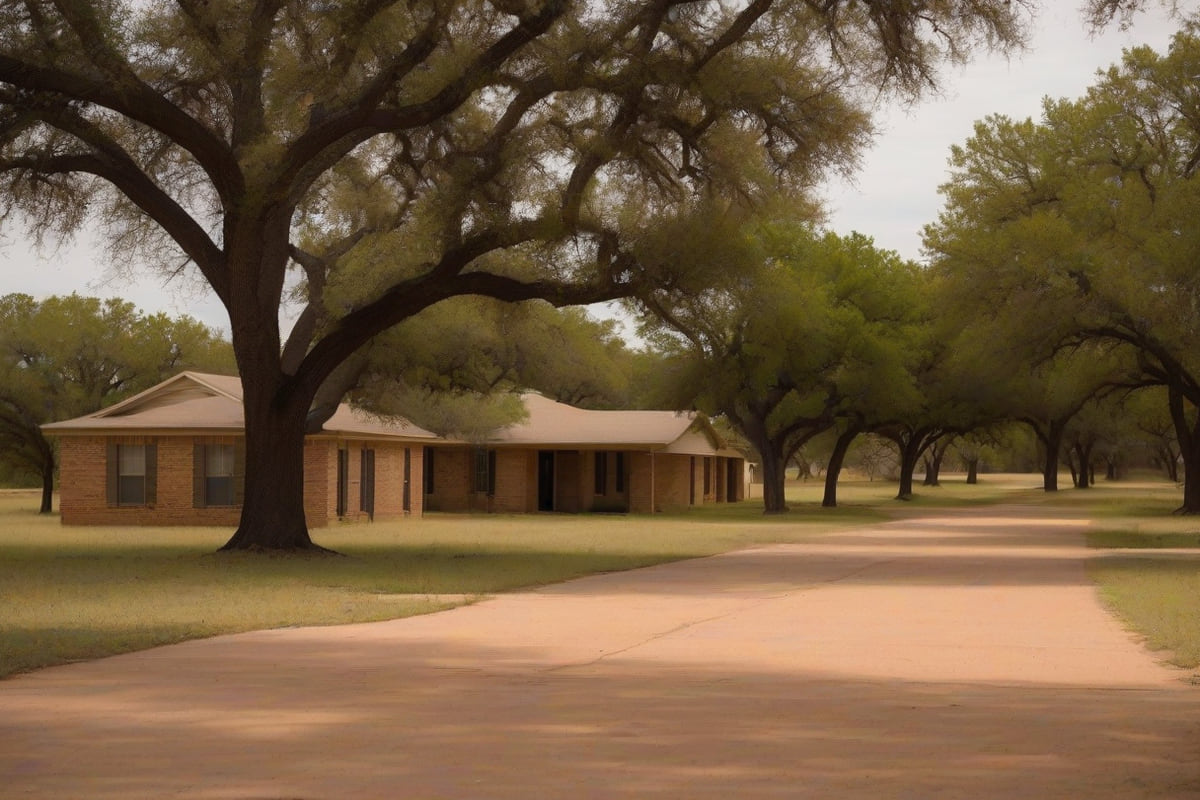
Abilene sits where the Texas rangeland begins, and a large share of what sells around it is not a house on a lot. It is a house on five acres, or fifteen, usually with a barn, often on a well, nearly always on septic.
Residential mortgages are built for houses on lots. They will finance acreage — routinely — but the rules change in ways that catch people, and the most common outcome is a buyer discovering two weeks before closing that the property they are buying is not the property their loan program will fund.
Here is what actually governs it.
How much land a residential loan will finance
There is a persistent myth that residential loans cap out at ten acres. They do not, and no agency imposes a flat acreage limit.
What actually governs:
The property must be residential in character, not agricultural. The test is whether the value comes primarily from the home and its site rather than from the land's income-producing capacity. A house on forty acres of pasture can be fine. A working operation where the house is incidental to the enterprise is a farm loan, not a residential one.
The appraiser must find comparable sales. This is the real constraint, and it is where acreage deals actually die. If similar acreage properties have not sold recently in the area, the appraiser cannot support the value, and larger adjustments mean more uncertainty. Around Abilene the data is generally there — this is a market where acreage sells regularly, which is a genuine advantage over regions where it does not.
Excess land may simply be excluded. An appraiser may value the home and a typical site and treat the remainder as surplus land contributing little. You can still buy it; you just may not be able to borrow against all of it.
USDA has its own rule. The site value generally should not exceed 30% of the total value, which limits how much land a USDA loan will carry.
Barns, shops and outbuildings
This is the single most misunderstood part of an acreage purchase, and it costs people real money.
An appraiser gives value to outbuildings only where comparable sales demonstrate the market pays for them. A $70,000 metal shop building may contribute far less than $70,000 to the appraised value — sometimes very little — because buyers in the area do not consistently pay a premium for one.
That is not the appraiser being difficult. It is the method working correctly. But it means:
Do not assume the shop covers the gap between price and value. If you are paying a premium for improvements, the appraisal may not support it, and the difference is cash.
Agricultural outbuildings can raise a character question. Extensive livestock infrastructure — working pens, multiple barns, commercial-scale facilities — pushes toward an agricultural classification and away from residential financing.
Condition matters on FHA, VA and USDA. Property condition standards apply to all structures on the parcel, not only the house. A dilapidated barn can create a repair requirement even though nobody lives in it.

Well and septic
Outside the municipal service area, essentially every property is on a private well, an on-site sewage facility, or both.
Septic. Needs evidence of permitting through the county, and most programs want confirmation the system functions and serves the home adequately. Lot size and soil conditions govern what is permissible, and older systems on small lots sometimes do not meet current standards. On FHA, VA and USDA, an inspection is commonly required.
Wells. Government-backed programs require water testing — typically bacteria and nitrates, with additional parameters where local conditions warrant. The well must serve the property adequately and generally must not be shared without a recorded agreement meeting program requirements.
Distance requirements. Programs specify minimum separation between a well and a septic system, and between either and a property line. A well too close to a drain field is a real problem, and on older properties it happens.
Order these early. Water testing and septic inspection both take time and both occasionally return results that require remediation. A buyer who orders them in week three of a thirty-day contract is inviting an extension.
USDA, which covers most of the surrounding county
Taylor County outside Abilene's city limits is substantially USDA-eligible, and so are most of the surrounding counties.
USDA financing offers no down payment for borrowers within household income limits, and its guarantee fee structure is generally cheaper over a long hold than FHA mortgage insurance. For a buyer looking at a place outside town, it is frequently the strongest option available and it is badly underused.
Verify both tests by address: property eligibility, which is mapped and periodically redrawn, and household income, which counts all adult household members rather than only the borrowers.
Note the site value rule above — on a property with substantial acreage, USDA may not be the right fit even where the location qualifies.
Dyess, and VA loans
Dyess Air Force Base on the west side supports B-1B and C-130J operations and is a major part of the local economy.
For eligible service members and veterans, VA financing is generally the strongest program available — no down payment, no monthly mortgage insurance, and a funding fee waived entirely for veterans receiving compensation for a service-connected disability. The Texas disabled veteran property tax exemption scales with rating and reaches a full homestead exemption at 100%.
VA will finance acreage under the same character and comparable-sales logic above, and applies its own Minimum Property Requirements to every structure on the parcel. We set out the VA program in full detail on our Killeen page.
Taylor County taxes
Combined rates in Abilene generally run in the 2.1% to 2.6% range — City of Abilene, Taylor County, a hospital district, and your school district, most often Abilene ISD or Wylie ISD. The two districts split the area and carry different rates, and the Wylie ISD portion has grown considerably.
Outside the city limits the municipal portion drops away and combined rates fall meaningfully — one of the real financial arguments for buying out of town, alongside USDA eligibility.
Verify the parcel with the Taylor Central Appraisal District. One item specific to acreage: if the seller carried an agricultural valuation on the land, that valuation may not carry over to you, and a change in use can trigger a rollback tax recovering several years of the difference. Ask the title company directly whether a rollback is possible on the parcel before closing.
Where people buy
Southwest Abilene along Buffalo Gap Road holds most of the newer development and the higher end of the market, largely Wylie ISD.
Elmwood and the neighborhoods near the universities carry mid-century stock on established lots.
Central and north Abilene hold the oldest housing and the most affordable entry points.
Buffalo Gap and Tuscola to the south move quickly into acreage, well and septic, with Jim Ned CISD.
Merkel, Clyde and the surrounding small towns are where USDA eligibility and larger tracts become the norm.
The city
Abilene was founded in 1881 by cattlemen who bought land along the Texas and Pacific Railway and named it for Abilene, Kansas, the railhead at the end of the Chisholm Trail.
The city has an unusual concentration of private higher education for its size — Abilene Christian University, Hardin-Simmons University and McMurry University all operate here, a legacy of three separate denominations founding colleges within two decades.
Abilene is the official Storybook Capital of America, with a permanent collection of bronze sculptures of characters from children's literature installed downtown and at the National Center for Children's Illustrated Literature.
The restored 1930 Paramount Theatre anchors the downtown arts district, and Frontier Texas! interprets the region's nineteenth-century history.
Abilene State Park and Lake Fort Phantom Hill handle most of the outdoor recreation, and the ruins of Fort Phantom Hill, an 1851 army post, stand north of the city.
Not sure which fits? Compare every loan program we place.
Frequently asked questions
Is there an acreage limit on a residential mortgage? No flat limit. What governs is whether the property is residential rather than agricultural in character, and whether the appraiser can find comparable sales to support the value. Excess land may be treated as surplus and contribute little.
Will the appraisal count my barn or shop? Only to the extent comparable sales show the market pays for one. A large metal building may contribute far less than it cost. Do not assume outbuildings will close a gap between price and appraised value.
What does a lender require for a well? Water testing on government-backed programs, typically bacteria and nitrates, confirmation the well adequately serves the property, and compliance with minimum distance requirements from the septic system and property lines.
What about septic? Evidence of county permitting and, on FHA, VA and USDA, commonly an inspection confirming the system functions and is adequate for the home. Older systems on small lots sometimes fail current standards.
Is Taylor County eligible for USDA loans? Most of the county outside Abilene's city limits is, as are the surrounding counties. Verify property location and household income by address. Note that USDA generally limits site value to 30% of total value, which constrains how much acreage it will carry.
What is a rollback tax? If land carried an agricultural valuation and the use changes, the county can recover several years of the difference between the agricultural and market valuation. Ask the title company whether a rollback is possible before you close on acreage.
What are property taxes in Abilene, TX? Combined rates generally run about 2.1% to 2.6% inside the city, lower outside it, varying between Abilene ISD and Wylie ISD. Verify with the Taylor Central Appraisal District.
Send us the listing before you get attached
On an acreage property, the question of which loan programs will even fund it is answerable from the listing and a map, in about ten minutes.
That is a much better time to find out than after the appraisal.
Start your application · Run the numbers · Call 737-347-1314
Looking at a property in Abilene?
Send us the address and we will model the real payment — taxes, insurance and HOA included — before you write an offer.
Talk To A Loan OfficerNearby Areas
Nearby & Related