Carrollton Mortgage Broker: Cash-Out Refinance and Home Equity
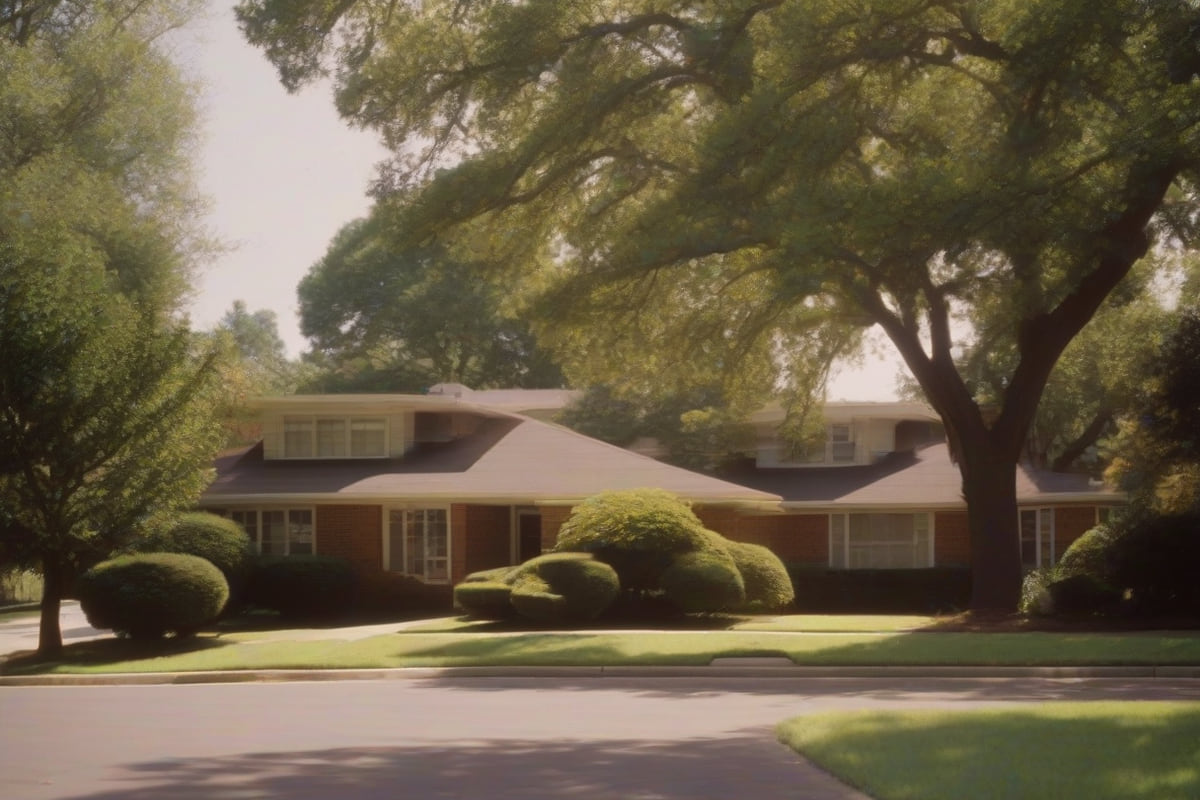
Carrollton is essentially built out. Most of it went up between the late 1960s and the early 1990s, the lots are mature, and a large share of owners have been in place long enough to hold substantial equity.
Which makes this less of a purchase market than most DFW suburbs and more of a refinance and equity market — and Texas has home equity rules that exist in no other state.
If you are pulling cash out of a Texas homestead, the rules below are constitutional, not lender policy. No lender can waive them, and nobody can shop around them.
Texas home equity rules, plainly
Any cash-out refinance on your homestead in Texas is a Section 50(a)(6) loan, named for the provision of the Texas Constitution that governs it. What that provision imposes:
An 80% limit on total loan-to-value. You cannot borrow against more than 80% of the appraised value of your homestead, counting every lien against it. This is the big one — in most states a cash-out can go higher. Here it cannot, regardless of your credit or income.
A 2% cap on certain fees. Specified closing costs are capped at 2% of the loan amount, which excludes certain third-party charges such as the appraisal, survey and title insurance premium.
One home equity loan at a time, and generally no more than one in any 12-month period.
A 12-day cooling-off period. You must receive a prescribed notice at least 12 days before closing, and the loan cannot close sooner.
Closing location is restricted to a lender's office, a title company or an attorney's office. Not your kitchen table.
No personal liability beyond the property. A Texas home equity loan is non-recourse — the lender's remedy is the property. It also cannot be foreclosed without a court order, which is a meaningful protection relative to the ordinary Texas non-judicial process.
Agricultural homesteads are largely excluded, with a narrow exception for land used for dairy farming.
The rule that catches people years later
Historically, once a loan was a 50(a)(6), every subsequent refinance of that property was also a 50(a)(6) — the designation attached to the property and never came off. That meant a one-time cash-out could keep you inside the 80% ceiling and the fee cap indefinitely.
A 2017 constitutional amendment, effective January 2018, changed that. Under Section 50(f)(2) a home equity loan can be refinanced into a conventional rate-and-term loan that is no longer a 50(a)(6), subject to conditions: at least a year must have passed since the home equity loan closed, no new cash may be advanced, the total loan-to-value must not exceed 80%, and a prescribed notice must be delivered.
This matters if you took equity out years ago and have been told ever since that you are stuck with home equity treatment. You may not be. It is worth an actual review rather than an assumption.
Cash-out, HELOC or a second — which fits
Three ways to reach the equity, and they behave differently:
A cash-out refinance replaces your first mortgage entirely with a larger one. Right when the new rate is at or below your current rate, or when you want one payment and a fixed term. Wrong when you hold a very low first-mortgage rate, because refinancing surrenders it on the whole balance.
A home equity line of credit sits behind your existing first mortgage and leaves it untouched. Right when your first mortgage rate is better than anything available today, and when you want to draw as needed rather than all at once. Usually a variable rate.
A fixed-rate second lien also leaves the first alone, but funds in one lump at a fixed rate.
The deciding question is almost always what rate your existing first mortgage carries. An owner holding a first mortgage well below current market who refinances the whole balance to reach equity is usually making an expensive trade, and it is the most common error we see. More on the comparison.
The 80% ceiling applies across all of these on a homestead — it is a limit on total liens, not on any single loan.

Three counties and three school districts
Carrollton sits in Dallas County, Denton County and a small portion of Collin County, and its addresses feed Carrollton-Farmers Branch ISD, Lewisville ISD or Plano ISD.
For a refinance this matters less than for a purchase, but it still matters: your appraisal, your tax escrow and your exemption filing all run through the right county's appraisal district, and using the wrong one delays a file.
For a purchase it matters a great deal. School district is the largest line on a Texas tax bill, and Carrollton's district boundaries do not follow city limits or neighborhoods.
Combined rates generally run in the 2.1% to 2.6% range depending on which county and district the parcel sits in. Verify with Dallas CAD, Denton CAD or Collin CAD as applicable.
The housing stock, and what a refinance appraisal will find
Most of Carrollton is 1970s and 1980s brick construction on established lots with very large trees.
Three recurring items on an appraisal or inspection here:
Original roofs and North Texas hail. Roof age drives insurance more than it drives the appraisal, and carriers in this market have tightened considerably on older roofs, some settling on actual cash value rather than replacement cost. A higher insurance premium raises your escrow and your qualifying ratio.
Cast iron and clay drain lines in the older sections, at the end of their service life.
Mature tree roots and foundation movement. Large trees close to a slab draw moisture from expansive clay. Some movement is normal at this age; active movement is not, and an appraiser will condition on visible structural concern.
Polybutylene supply piping appears in some late-1970s and 1980s construction and is a known insurance issue.
None of these stop a refinance. All of them can affect the appraised value that your 80% ceiling is calculated from — which in Texas is the number that decides how much you can actually take.
Where people buy
Old Downtown Carrollton around the square is the oldest and densest part of the city, with the DART Green Line and A-train both stopping there.
Josey Ranch and the central corridor hold the 1970s core of the city.
North Carrollton toward Hebron and the Denton County line is the newer end, 1990s and 2000s construction, largely Lewisville ISD.
The Old Denton Road corridor is the center of one of the largest Korean-American business districts in the southern United States, with a concentration of retail, restaurants and services along it.
Rosemeade and Furneaux Creek neighborhoods back onto the greenbelt trail system.
The city
Carrollton was settled in the 1840s by families from Illinois and named, most accounts hold, for Carrollton, Illinois.
The downtown square around the 1878 town site kept its original street grid and now holds the city's historic district, with the restored Carrollton Depot on the Missouri–Kansas–Texas line.
A. W. Perry Homestead Museum preserves an 1909 farmhouse on land the Perry family settled in 1850.
The Elm Fork Greenbelt and Furneaux Creek Trail connect much of the city on foot and by bike, and Oak Grove Park and Josey Ranch Lake handle most of the local recreation.
Carrollton is one of the few Texas cities served by both DART light rail and the Denton County A-train, which meet at the downtown station.
Not sure which fits? Compare every loan program we place.
Frequently asked questions
How much equity can I take out of a Texas home? No more than 80% of the appraised value counting all liens against the homestead. This is a Texas constitutional limit, not a lender guideline, and no lender can exceed it.
What is a 50(a)(6) loan? The section of the Texas Constitution governing home equity loans on a homestead. Any cash-out refinance on your homestead is one, and it carries the 80% cap, a 2% cap on certain fees, a 12-day cooling-off period, restrictions on where it may close, and non-recourse treatment.
I was told my home is stuck as a home equity property. Is that still true? Possibly not. Since January 2018, Section 50(f)(2) permits refinancing a home equity loan into a conventional rate-and-term loan that is no longer 50(a)(6) — provided at least a year has passed, no new cash is taken, total loan-to-value stays at or below 80%, and a prescribed notice is given.
Should I do a cash-out refinance or a HELOC? Largely depends on the rate on your existing first mortgage. If it is well below current market, refinancing the whole balance to reach equity is usually an expensive trade, and a HELOC or fixed second that leaves the first alone is better.
How long does a Texas home equity loan take to close? Longer than a standard refinance. The 12-day notice period is a floor, not a target, and it runs before closing rather than in parallel with underwriting.
What are property taxes in Carrollton, TX? Generally about 2.1% to 2.6% combined, varying by county and school district. Verify with Dallas, Denton or Collin CAD depending on where the parcel sits.
Which school district is my Carrollton address in? Carrollton-Farmers Branch ISD, Lewisville ISD or Plano ISD. The boundaries do not follow city limits — verify by address with the district.
Bring us your current mortgage statement
The right answer here usually turns on one number: the rate on the loan you already have. With that and an estimate of value, we can tell you in a single conversation whether a cash-out, a HELOC or leaving it alone is the better trade.
Start your application · Run the numbers · Call 737-347-1314
Looking at a property in Carrollton?
Send us the address and we will model the real payment — taxes, insurance and HOA included — before you write an offer.
Talk To A Loan OfficerNearby Areas
Nearby & Related